

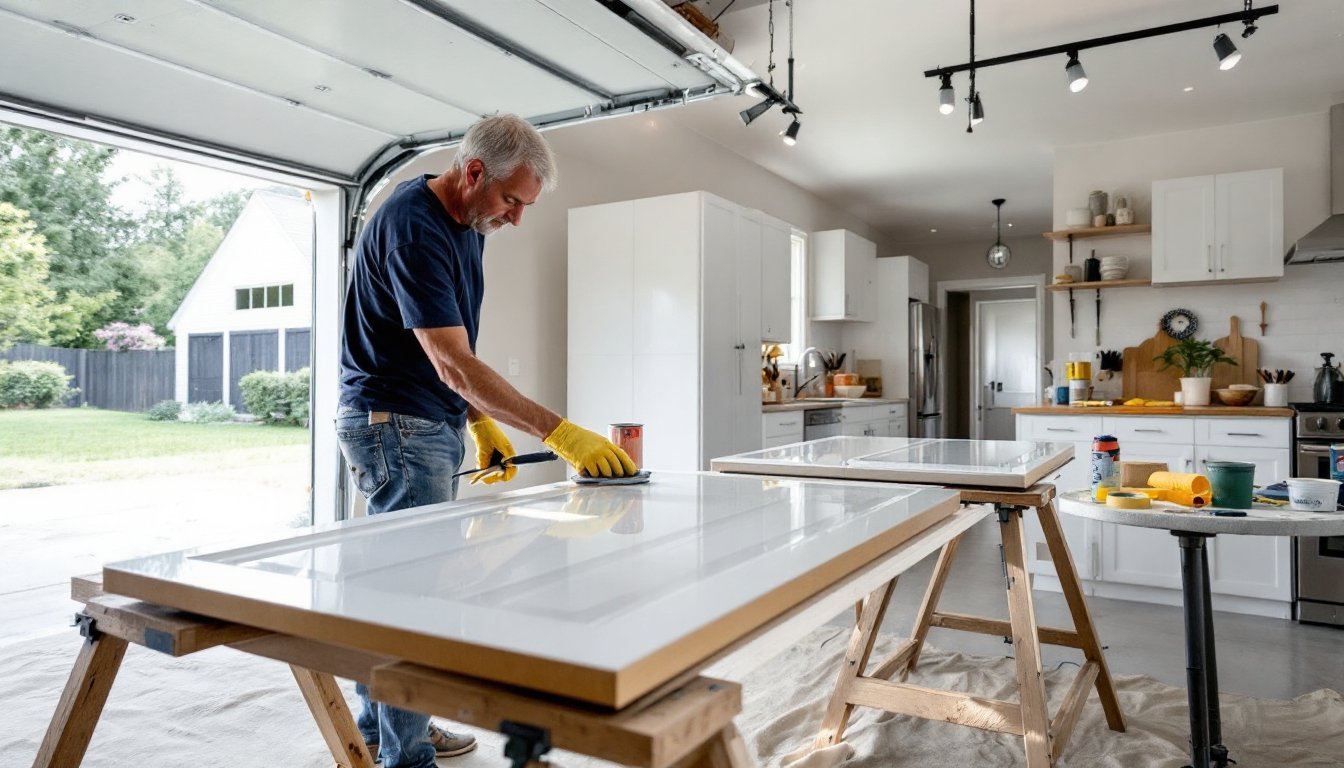

Replacing kitchen cabinets can drain $8,000 to $25,000 from a renovation budget, but painting them costs a fraction of that while delivering similar visual impact. If your cabinets are structurally sound but dated, a DIY paint job can transform the heart of your home for $200 to $600 in materials. The process isn’t complicated, but it’s detail-intensive. Skip the prep work or use the wrong primer, and you’ll see chips and adhesion failures within months. This guide walks through everything needed to repaint kitchen cabinets the right way, from surface preparation to topcoat application, so the finish lasts years instead of peeling by next spring.
Key Takeaways
- Painting kitchen cabinets costs $200–$600 compared to $8,000–$25,000 for replacement, delivering 70–80% of the visual impact at a fraction of the price.
- Thorough degreasing, sanding, and priming are essential prep steps—skipping them leads to paint peeling and adhesion failure within months.
- Choose a bonding primer and cabinet-grade paint (alkyd enamel, acrylic-alkyd hybrid, or cabinet-grade acrylic) in satin sheen for durability and washability.
- Apply paint in thin, multiple coats using proper technique: light roller pressure for flat areas, angled brush work for details, with 220-grit sanding between coats.
- Wait 7–14 days for paint to fully cure before reinstalling hardware, as premature handling causes scratches and compromises the finish.
- Avoid common mistakes like painting in high humidity, using cheap tools, skipping ventilation, and overloading brushes—these sabotage even well-prepared kitchen cabinet painting projects.
Why Paint Your Kitchen Cabinets Instead of Replacing Them?
The best way to paint kitchen cabinets starts with understanding when it makes sense. Cabinet replacement involves demolition, disposal, ordering new boxes and doors, installation, and potential plumbing or electrical adjustments. That’s why contractors quote $15,000+ for mid-range kitchens.
Painting existing cabinets delivers 70–80% of the visual update at roughly 5% of replacement cost. If the cabinet boxes are solid wood, plywood, or MDF in good condition, no water damage, sagging shelves, or broken hinges, they’re candidates for paint. Laminate and thermofoil can be painted too, but require specialized bonding primers.
Homeowners save money and avoid weeks of construction dust. The typical DIY kitchen cabinet painting project takes a long weekend for prep and application, plus cure time. Compare that to the two-week timeline (or longer) for a full cabinet replacement, and the appeal becomes obvious.
That said, if cabinet boxes are particle board that’s swollen from moisture, or if doors are warped beyond adjustment, replacement makes more sense. Paint won’t fix structural problems.
What You’ll Need: Tools and Materials for Cabinet Painting
Gathering the right supplies upfront prevents mid-project trips to the hardware store. Here’s what’s needed to paint kitchen cabinets properly:
Materials:
- Degreasing cleaner (TSP or TSP substitute)
- 120-grit and 220-grit sandpaper or sanding sponges
- Bonding primer (shellac-based or high-adhesion latex)
- Cabinet paint (alkyd enamel or acrylic-alkyd hybrid, 1–2 quarts per 10 cabinet doors)
- Painter’s tape (1.5″ or 2″ width)
- Drop cloths (canvas or plastic)
- Wood filler (for dings and old hardware holes)
- Tack cloth or microfiber rags
Tools:
- Screwdriver or drill (for removing doors and hardware)
- Sanding block or orbital sander
- Paint sprayer (optional but gives the smoothest finish: HVLP models work well)
- High-quality brushes (2″ angled sash brush for detail work)
- Foam or microfiber rollers (4″ mini rollers, 1/4″ or 3/8″ nap)
- Paint tray and liners
- Sawhorses or a painting station (to hold doors horizontally)
Safety Gear:
- Respirator or N95 mask (especially if using solvent-based products)
- Nitrile gloves
- Safety glasses
Many DIYers debate whether to spray or roll. Spraying delivers a factory-like finish without brush marks, but requires proper ventilation or an outdoor workspace. Rolling and brushing work fine indoors and cost less upfront, though they demand more attention to technique.
Step-by-Step: Preparing Your Cabinets for Painting
How to prep kitchen cabinets for painting determines whether the topcoat adheres for a decade or chips off in six months. Preparation takes more time than the actual painting, but it’s non-negotiable.
1. Empty and Label Everything
Remove all cabinet contents. Label each door and drawer front with painter’s tape and a number corresponding to its location. Hinges and hardware go into labeled bags.
2. Remove Doors, Drawers, and Hardware
Unscrew hinges and pulls. Take doors and drawer fronts to a well-ventilated workspace, a garage or covered patio works. If painting the cabinet boxes in place, mask off walls, countertops, and appliances with painter’s tape and drop cloths.
3. Clean Thoroughly
Kitchen grease is paint’s enemy. Scrub all surfaces with a degreaser like TSP (trisodium phosphate) or a TSP substitute mixed per label directions. Rinse with clean water and let dry completely. Skipping this step is the easiest way to paint kitchen cabinets poorly.
4. Fill Imperfections
Use wood filler for dents, scratches, or old hardware holes you won’t reuse. Let dry per product instructions (usually 1–2 hours), then sand smooth with 120-grit sandpaper.
5. Sand for Adhesion
Lightly sand all surfaces with 120-grit sandpaper to rough up the existing finish. You’re not stripping old paint, just scuffing it so primer grabs. Wipe away dust with a tack cloth or damp microfiber rag. Don’t skip this: even “no-sand” primers perform better on roughened surfaces.
6. Mask and Protect
Tape off hinges, door edges that won’t be painted, and any glass or decorative inserts. Lay doors flat on sawhorses for painting.
Many budget home makeovers start with thorough cabinet prep, it’s the difference between a DIY win and a redo.
Choosing the Right Paint and Finish for Kitchen Cabinets
Not all paints hold up to the wear kitchens dish out. The wrong product leads to premature chipping, yellowing, or a finish that never fully hardens.
Primer Selection
Use a bonding primer or stain-blocking primer designed for cabinets. Shellac-based primers (like BIN) block tannins and odors, dry fast, and stick to glossy surfaces without heavy sanding. High-adhesion latex primers work too, but take longer to dry. One coat of primer is usually enough: two coats help if painting over dark stain or red oak.
Paint Type
For kitchen cabinets, paint needs durability and a hard, washable finish:
- Alkyd (oil-based) enamel: Self-levels beautifully, extremely durable, but has strong odor and requires mineral spirits for cleanup. Dry time: 12–24 hours between coats.
- Acrylic-alkyd hybrid: Combines oil-based durability with water cleanup. Popular brands include Benjamin Moore Advance and Sherwin-Williams ProClassic. Dry time: 4–6 hours between coats, full cure in 7–14 days.
- 100% acrylic latex: Water-based, low odor, but softer finish. Only choose cabinet-grade versions with hardeners.
Sheen Options
- Satin: Subtle sheen, hides minor imperfections, easiest to touch up. Most popular for DIY kitchen cabinet painting.
- Semi-gloss: More reflective, very washable, but highlights surface flaws.
- Matte/flat: Not recommended for cabinets, too hard to clean.
Color Considerations
White and off-white dominate cabinet paint jobs for good reason: they brighten kitchens and pair with any decor. Darker colors show wear and dust more readily but create drama. Test paint samples on a cabinet door or piece of primed wood before committing to gallons.
If you’re debating whether can you paint kitchen cabinets yourself, the answer is yes, but using the right products matters more than skill level.
How to Apply Paint for a Smooth, Professional Finish
Applying paint is where technique separates a DIY job from a pro-looking result. Patience and thin coats beat speed and heavy application every time.
Priming
Apply bonding primer to all surfaces, door fronts, backs, edges, and cabinet frames. Use a foam roller for flat areas and a 2″ angled brush for details and edges. Let primer dry fully (check the label: shellac-based products dry in 45 minutes, latex in 2–4 hours). Lightly sand with 220-grit sandpaper, then wipe clean.
First Paint Coat
Stir paint thoroughly but don’t shake, bubbles cause surface imperfections. Start with door backs and cabinet interiors to practice technique on less-visible areas.
- Rolling: Load a foam or microfiber mini roller lightly. Apply paint in smooth, overlapping passes without pressing hard. Roll vertically on door stiles (vertical frame pieces) and horizontally on rails (horizontal pieces).
- Brushing: For details, use an angled sash brush with the grain. Feather edges to avoid visible brush marks.
- Spraying: Hold the sprayer 8–12″ from the surface, moving in steady passes with 50% overlap. Two thin coats beat one thick coat.
Let the first coat dry per paint label (typically 4–24 hours depending on product). Lightly sand with 220-grit between coats to knock down any nibs or brush marks, then tack off dust.
Second Coat
Apply a second coat using the same technique. Most cabinet paints require two topcoats over primer for full coverage and durability. Some darker colors need a third.
Final Details
Once the final coat is dry to the touch, resist the urge to reinstall immediately. Acrylic-alkyd paints need 7–14 days to fully cure before they can withstand daily wear. During this time, avoid stacking doors or placing objects on freshly painted surfaces.
The easiest way to paint kitchen cabinets involves working in stages, prime everything one day, first coat the next, second coat after that, to avoid rushing and ruining the finish.
Common Mistakes to Avoid When Painting Cabinets
Even careful DIYers stumble into traps that compromise the finish. Here’s what to watch for:
Skipping Degreasing
Grime and cooking oil block primer adhesion. If paint peels in sheets a month later, insufficient cleaning is usually why. Don’t trust a quick wipe-down, use a real degreaser.
Painting in High Humidity
Latex and acrylic paints don’t cure properly in humidity above 70%, and oil-based products dry even slower. Paint on dry days with temps between 50–85°F. Running a dehumidifier in the workspace helps.
Overloading Brush or Roller
Too much paint causes drips, sags, and an uneven finish. Load brushes and rollers lightly, applying multiple thin coats instead of one thick layer.
Not Sanding Between Coats
Dust, brush hairs, and surface irregularities happen. A quick pass with 220-grit sandpaper between coats keeps the finish smooth. Wipe dust away with a tack cloth.
Reinstalling Hardware Too Soon
Freshly painted cabinets feel dry but aren’t fully cured. Mounting hinges and handles before the paint hardens leads to scratches, dents, and smudges. Wait the full cure time listed on the paint can, usually 7–14 days for hybrids and latex, 30 days for oil-based.
Ignoring Ventilation
Alkyd enamels and some primers emit strong fumes. Work in a ventilated space with open windows and fans, and wear a respirator rated for organic vapors. Prolonged exposure causes headaches and dizziness.
Using Cheap Brushes or Rollers
Bargain brushes shed bristles into wet paint, and low-quality rollers leave texture. Invest in good tools, they cost $20–40 total and make a noticeable difference.
Many DIY furniture projects and room makeovers emphasize prep and patience for a reason: shortcuts show.
Conclusion
Painting kitchen cabinets is one of the highest-return DIY projects a homeowner can tackle, if done right. The process demands careful prep, the right materials, and patience during cure times, but the payoff is a kitchen that looks updated without the cost or disruption of a full remodel. Follow the steps outlined here, avoid common pitfalls, and the result will rival a professional job at a fraction of the price.