

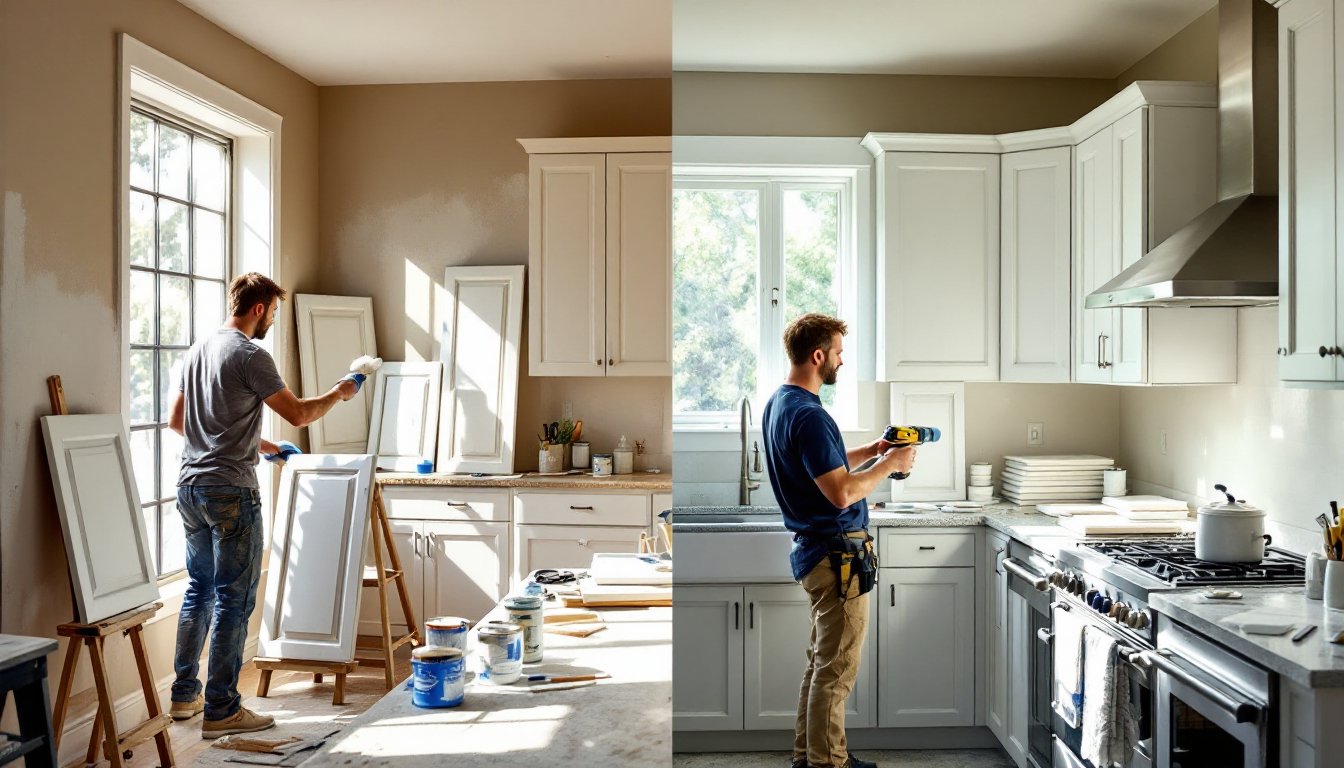

Kitchen cabinets dominate the visual footprint of the space, and when they’re tired or outdated, the room feels wrong no matter how new the appliances are. Homeowners facing this dilemma usually land on two options: painting or refacing. Both can deliver a dramatic refresh without the nuclear option of full replacement, but the costs, labor, and longevity differ significantly. Understanding the real numbers, not just the advertised estimates, helps avoid buyer’s remorse and project creep. This guide breaks down what each approach actually costs in 2026, how long the results hold up, and which cabinet conditions suit each method.
Key Takeaways
- Painting kitchen cabinets costs $200–$600 for DIY or $2,500–$7,000 for professional work, making it the most budget-friendly cabinet transformation option.
- Cabinet refacing typically ranges from $4,500–$10,000 and lasts 10–15 years compared to painted cabinets which need touch-ups every 5–10 years, especially in high-wear areas.
- Professional painted finishes using catalyzed conversion varnish outlast DIY latex paint jobs by 2–3 years, but proper prep work and ventilation are essential to prevent peeling within months.
- Choose painting for solid cabinet boxes in good condition with tight budgets or simple style updates; choose refacing for structurally sound boxes where doors are damaged or a major style overhaul is desired.
- Kitchen downtime varies significantly: DIY painting takes 1–2 weeks with semi-function, professional painting takes 3–5 business days, and refacing takes 2–4 days onsite with minimal odor or dust disruption.
What’s the Real Cost of Painting Kitchen Cabinets?
Painting cabinets is the most budget-friendly transformation, but the final price swings wildly depending on whether it’s a DIY weekend project or a professional job. The difference isn’t just labor, it’s also prep quality, materials, and how long the finish lasts before chipping.
DIY Painting Costs
For a standard 10×12 kitchen with 20 cabinet doors and drawer fronts, expect to spend $200 to $600 on materials if doing it yourself. That includes:
- Deglosser or TSP cleaner: $10–$20 per quart
- Primer (oil-based or bonding primer like Zinsser BIN): $25–$40 per quart, coverage ~100 sq ft per quart
- Paint (cabinet-grade enamel or urethane alkyd): $40–$70 per quart, plan for two coats
- Sandpaper (120- and 220-grit): $15–$25
- Brushes, rollers, or HVLP sprayer supplies: $30–$100
- Painter’s tape, drop cloths, hardware: $20–$40
The cost creeps higher if cabinets need wood filler for dents or if doors are removed and rehung with new hinges. DIY painting demands 3 to 5 full days for an average kitchen, more if working evenings and weekends. Skipping steps (like deglosser, primer, or proper drying time) leads to peeling within months, especially near the sink and stove where grease and moisture accumulate.
Safety note: Use a respirator rated for VOCs when working with oil-based primers or alkyd paints indoors. Ventilate continuously.
Professional Painting Costs
Hiring a pro raises the bill to $2,500 to $7,000 for the same kitchen, depending on the number of cabinets, finish type, and regional labor rates. Professionals typically:
- Remove doors and drawer fronts, label them, and spray them offsite or in a controlled environment
- Clean, sand, and prime all surfaces with commercial-grade products
- Apply two to three coats of catalyzed conversion varnish or cabinet enamel with fine sanding between coats
- Reinstall hardware or supply new hinges and pulls
Professional spray finishes cure harder and more uniformly than brush-and-roll DIY jobs, which translates to better resistance against everyday wear. Most pros also offer a warranty (typically 1 to 2 years), which DIY approaches obviously lack. For homeowners comparing costs, professional painting estimates often include surface repairs and hardware upgrades that DIYers budget separately.
How Much Does Cabinet Refacing Cost?
Refacing means replacing doors, drawer fronts, and hardware while covering the existing cabinet boxes with matching veneer or rigid thermofoil (RTF). The frames stay in place, so you keep the current layout and avoid the expense and disruption of demolition.
Typical costs for refacing a 10×12 kitchen range from $4,500 to $10,000, with the price heavily influenced by door style, material, and hardware quality. Breakdown:
- Veneer or RTF for cabinet frames: $15–$40 per linear foot
- New doors and drawer fronts (slab, shaker, or raised-panel MDF or hardwood): $50–$200 per door, depending on size and style
- Hinges (soft-close European hinges are standard): $3–$8 per hinge
- Drawer slides (if replaced): $10–$30 per set
- Handles and pulls: $2–$15 each, multiply by 30+ pieces for an average kitchen
- Labor: Typically 40–60% of the total project cost
Refacing doesn’t fix structural problems. If cabinet boxes are water-damaged, sagging, or poorly built, new veneers and doors won’t solve those issues. Installers may refuse to reface boxes that aren’t square or sturdy. Also, refacing locks you into the existing footprint, if the layout is inefficient or the cabinets are shallow builder-grade units, you’re stuck with that.
Material choice matters. Hardwood veneer with solid wood doors costs more but feels premium and ages better than RTF, which can delaminate in humid or high-heat areas. Cabinet companies often bundle refacing with optional add-ons like crown molding, under-cabinet lighting, or rollout shelves, which push the price higher but improve functionality.
For context, recent cabinet refacing cost data shows typical ranges between $1,500 and $5,000 for refinishing projects, which some homeowners confuse with refacing, the two are distinct processes, with refacing being the more expensive option due to new components.
Comparing Long-Term Value: Which Option Lasts Longer?
Longevity depends on materials, technique, and how much abuse the kitchen sees. Painted cabinets done right can last 5 to 10 years before needing touch-ups or a full repaint, while professionally refaced cabinets often hold up 10 to 15 years or more.
Painted cabinets are vulnerable at high-contact points: door edges, handles, and corners near appliances. Oil from hands, grease splatters, and repeated cleaning gradually wear through topcoats, especially with water-based paints. Alkyd enamels and conversion varnishes resist wear better but cost more and require ventilation during application. DIY jobs using standard latex paint and foam rollers typically show chips and dullness within 2 to 3 years.
Refaced cabinets replace the most-handled parts, doors and drawer fronts, with factory-finished components that have UV-cured or catalyzed finishes. These are more durable than field-applied paint. The veneer on cabinet boxes also resists minor dings better than raw painted MDF or particleboard. But, RTF veneer can peel or bubble if exposed to steam or heat (near dishwashers or ranges), and repairs are difficult because matching veneer isn’t always available years later.
Neither option is permanent. Full cabinet replacement with plywood boxes and dovetail drawers will outlast both painting and refacing, but costs $15,000 to $40,000 or more for an average kitchen, three to eight times the price of refacing.
Homeowners planning to sell within a few years often choose painting for the lower upfront cost and strong cosmetic return. Those staying long-term and wanting a more substantial upgrade lean toward refacing, especially if the existing boxes are solid plywood and the layout works.
Time Investment and Disruption to Your Kitchen
How long the kitchen is unusable matters, especially in homes without a secondary prep area.
DIY painting takes 3 to 5 full days spread over 1 to 2 weeks, accounting for drying time between coats. The kitchen remains semi-functional, appliances stay in place, and you can usually access the sink and fridge, but countertops are covered, and cabinet contents need to be boxed up or moved. Doors are often removed and painted in a garage or basement, which means living with open shelving during the process.
Professional painting condenses the timeline to 3 to 5 business days because crews work full days and use fast-drying commercial products. Many pros remove doors offsite and return to install them once cured, minimizing kitchen downtime. Still, expect at least 2 to 3 days without access to stored dishes, pots, and pantry items.
Refacing typically takes 2 to 4 days onsite. Installers remove old doors and drawer fronts on day one, apply veneer to cabinet boxes on day two, and install new doors and hardware on days three and four. The kitchen isn’t fully operational during this window, but there’s no painting odor and less dust than sanding. Some refacing companies offer temporary doors or encourage homeowners to decant essentials into a utility room or dining area.
Both painting and refacing create mess and require prep work, emptying cabinets, moving small appliances, and protecting floors and countertops. For households with young kids or anyone working from home, plan the project around school breaks or a long weekend. Budget time for reinstalling shelf liners, organizing contents, and adjusting hardware after installation.
Which Option Is Right for Your Cabinet Condition and Style Goals?
The condition of existing cabinets and the desired outcome determine which approach makes sense. Not every kitchen is a good candidate for either method.
Choose painting if:
- Cabinet boxes and doors are solid wood or MDF in good structural shape with no warping, water damage, or delamination
- The current door style (flat slab or simple shaker) fits the desired aesthetic, painting doesn’t change profiles
- Budget is tight (under $3,000 for a modest kitchen)
- The goal is a color change or modernizing a dated finish (honey oak to white, dark stain to gray)
- Cabinets have intricate details or molding that would be costly to replicate in refacing
Painting works well on solid hardwood face frames and doors but struggles on glossy laminate or thermofoil unless those surfaces are thoroughly sanded and primed with a bonding primer. Laminate cabinets are notorious for paint adhesion failures, deglosser and multiple primer coats are non-negotiable.
Choose refacing if:
- Cabinet boxes are structurally sound (plywood or solid particleboard, square, and level) but doors are damaged, outdated, or you want a completely different style (switching from raised panel to shaker, for example)
- The current layout and storage capacity work well, no need to add cabinets or reconfigure
- Budget allows $5,000 to $10,000 and the goal is a more substantial transformation that mimics new cabinetry
- Doors are laminate or thermofoil that’s peeling or discolored, refacing replaces those entirely
- The kitchen sees heavy use, and long-term durability justifies the higher cost
Refacing doesn’t make sense if boxes are particleboard that’s swollen from water damage, if the layout is inefficient, or if cabinets are very shallow builder-grade units that limit storage. In those cases, the investment in refacing approaches the cost of budget new cabinets, and replacement becomes the smarter move.
For homeowners uncertain about project costs and contractor options, getting multiple quotes for both painting and refacing helps clarify what’s realistic for the condition and style goals of a specific kitchen. Neither option is objectively better, it’s about matching method to cabinet condition, budget, and how long the homeowner plans to stay in the home.