

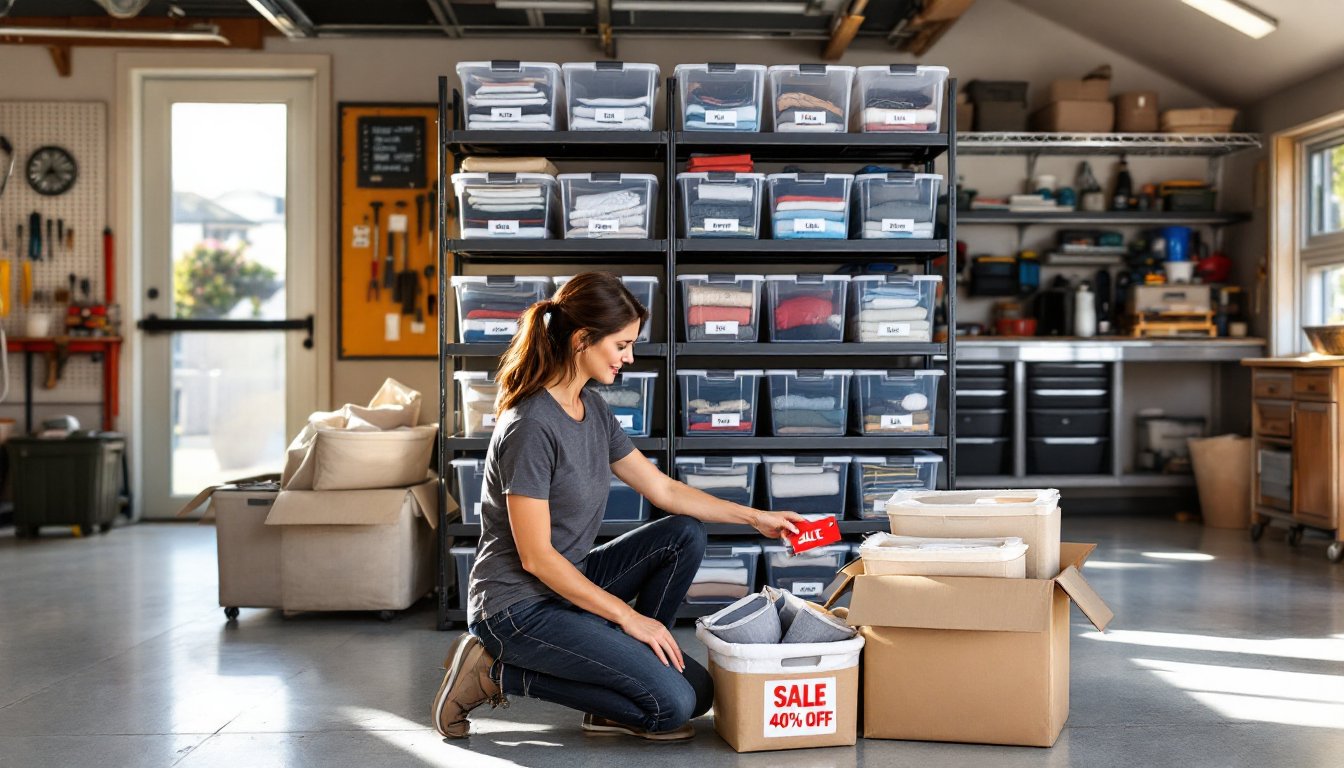

A cluttered garage, overflowing closet, or chaotic basement doesn’t need a full renovation, just smarter storage. When storage bins go on sale, it’s the perfect opportunity to overhaul home organization without blowing the budget. Whether tackling seasonal gear, kid’s toys, or workshop supplies, the right bins at the right price transform wasted space into functional zones. Sales timing matters, bin type matters, and knowing what to look for separates a bargain from a purchase that’ll crack, fade, or collect dust. This guide walks through how to shop storage bin sales strategically, which types deliver the best value, and how to match bins to the job, so every dollar spent actually solves a problem.
Key Takeaways
- Storage bins sale events offer 30-50% discounts that make bulk organization affordable and enable uniform bin sizing to maximize shelf and closet space.
- Clear plastic bins with snap-latch lids and thicker polypropylene (3-4mm walls) are the most versatile choice for garage, attic, and basement storage, while fabric bins suit visible storage in living spaces like bookcases and kids’ rooms.
- Timing matters: post-holiday clearances (January), back-to-school sales (August-September), and holiday weekends (Memorial Day, July 4th, Labor Day) consistently offer steep storage bin discounts.
- Calculate per-unit cost rather than total price, inspect quality indicators like plastic thickness and latch operation, and measure your space before purchasing to avoid costly mistakes.
- Strategic shoppers combine storage bins sale prices with coupons, cashback rewards, and bulk multi-packs while avoiding single-purpose gimmicks and trendy styles that won’t adapt to future needs.
Why Shopping Storage Bin Sales Is a Game-Changer for Home Organization
Storage bins aren’t glamorous, but they’re the backbone of functional spaces. Full-price bins add up fast, especially when organizing a full attic, pantry, or garage requires a dozen or more. Sales drop unit costs by 30-50%, making it feasible to standardize a system rather than cobble together mismatched containers.
Buying in bulk during sales also means uniform sizing, which maximizes shelf and closet space. Stacking 20-gallon clear totes with identical footprints wastes zero vertical clearance, unlike random boxes that leave gaps. Uniform bins also simplify labeling and rotation, critical for seasonal storage or inventory management in a workshop.
Sales typically coincide with product refreshes or seasonal transitions, so retailers clear older stock to make room. That doesn’t mean inferior quality: it often means last year’s color or a discontinued lid style. For most DIY storage needs, those differences are irrelevant. The structural integrity and dimensions stay the same, and the discount is real.
Another advantage: sales let homeowners test bin types without major commitment. Unsure if fabric cube bins work for a bookshelf project? Grabbing a few at 40% off is low-risk experimentation. If they don’t fit the use case, they’re cheap enough to repurpose elsewhere or return.
Top Types of Storage Bins to Look for During Sales
Not all storage bins serve the same purpose, and sales are the time to stock up on the types that match actual needs, not just what looks good on the shelf.
Clear Plastic Bins for Versatile Visibility
Clear plastic storage bins are workhorses. They handle garage storage, attic organization, basement inventory, and under-bed seasonal rotation. Visibility eliminates guesswork, no digging through five bins to find holiday lights or camping gear.
Look for bins with snap-latch lids rather than friction-fit. Latches seal tighter against dust and moisture, critical in unfinished basements or outdoor sheds. Thicker polypropylene (typically 3-4mm walls) resists cracking in cold environments: cheaper bins go brittle in unheated spaces.
Common sizes during sales include 18-gallon (fits under standard bed frames), 32-gallon (ideal for bulky winter coats or sports equipment), and 66-gallon wheeled bins (excellent for bulk seasonal decor or camping supplies). Many storage bins offer stackable designs that interlock or nest, reducing topple risk on high shelves.
Avoid bins marketed as “decorative clear”, they’re often thinner acrylic that scratches easily and costs more. Plain utilitarian polypropylene delivers better durability per dollar.
Fabric and Canvas Bins for Stylish Storage
Fabric bins suit visible storage, bookcases, open shelving, closet cubbies, or kids’ play areas. Canvas, polyester, and felt blends come in dozens of colors and patterns, so they integrate into living spaces without the industrial look of plastic.
Reinforced wire frames or cardboard inserts maintain shape when empty: without them, fabric bins collapse and look sloppy. Check for dual handles, they make bins easier to pull from high shelves or tight spaces. Some models include label pockets or chalkboard panels, useful for frequently rotated contents.
Fabric bins work well for lightweight items: linens, toys, craft supplies, folded clothing. They’re poor choices for damp environments (basement, garage) or anything heavy, seams tear and fabric stretches. For long-term storage, pair fabric bins with moisture-absorbing packets if the space has humidity issues.
Sales often bundle fabric bins in sets of six or eight, dropping per-unit cost below $5. That’s the time to standardize closet systems or pantry shelving. When evaluating storage bins and baskets for easy organization, focus on washable fabrics, kids’ bins especially need periodic cleaning.
When and Where to Find the Best Storage Bin Deals
Timing and location directly impact savings. Storage bin sales follow predictable patterns tied to retail cycles and consumer behavior.
Post-holiday clearances (early January) offer steep discounts. Retailers clear out seasonal decor bins and holiday-themed organizers, but generic bins get marked down too. Late August and early September bring back-to-school and dorm sales, bins marketed for college students work just as well in home offices or craft rooms.
Big-box home improvement stores (Home Depot, Lowe’s, Menards) run quarterly storage sales, often Memorial Day, July 4th, and Labor Day. These align with garage and basement organizing season. Membership warehouse clubs (Costco, Sam’s Club) offer year-round low per-unit pricing on multi-packs, though selection is limited to a few sizes.
Online retailers (Amazon, Wayfair, Overstock) run lightning deals and flash sales unpredictably, but Prime Day (mid-July) and Black Friday consistently discount storage products 25-40%. Sign up for price alerts on specific bin models to catch drops.
Discount and closeout stores (HomeGoods, TJ Maxx, Big Lots) stock overruns and discontinued lines at 40-60% off retail. Selection is inconsistent, one visit might yield twenty bins, the next visit zero. For shoppers near multiple locations, it’s worth checking weekly during organizational pushes.
Local hardware stores often discount seasonal stock more aggressively than chains. End-of-summer sales clear patio storage bins and weatherproof totes, which also excel for garage or shed use. Building relationships with local retailers sometimes yields advance notice of clearance events.
How to Choose the Right Storage Bins for Your Space
Matching bin type to location and contents prevents wasted money and future headaches. Measure first, buy second.
Measure the space, not just floor area. Shelf depth, ceiling height, and door clearances all constrain bin dimensions. A 66-gallon bin might fit the floor but won’t clear a low basement ceiling or navigate a narrow stairwell. For shelving, measure depth and subtract 2 inches to allow clearance for pulling bins forward.
Consider access frequency. Items used monthly (sports gear, seasonal decor) suit bins with easy-open latches and clear sides. Long-term storage (archived tax records, baby clothes) tolerates less convenient bins with tamper-resistant seals.
Weight capacity matters. Plastic bins rated for 50 lbs often fail when loaded with books, hardware, or canned goods. Check manufacturer specs, not just size. For heavy contents, smaller bins distribute weight better, two 18-gallon bins beat one 32-gallon tote for lifting and shelf load.
Match material to environment. Unheated garages and attics need UV-resistant polypropylene that won’t crack in temperature swings. Damp basements require sealed lids and consider weatherproof gasket bins for electronics, documents, or textiles. Living spaces tolerate decorative fabric or woven bins that complement decor.
Stackability prevents toppling and maximizes vertical space. Bins with recessed lids nest into the bin below: straight-walled bins slide and tip. For shelving, flat-topped bins without handles stack tighter. Wheeled bins simplify moving bulk storage but add 4-6 inches of height, verify clearance under tables or workbenches.
For irregular items, sports equipment, gardening tools, open-top bins or bins with removable lids offer easier access than snap-latches. Tall narrow bins work well for vertical storage (wrapping paper, dowels, fishing rods), though they tip easily unless secured.
Maximizing Your Savings: Tips for Shopping Storage Bin Sales
Strategic shopping turns good sales into exceptional value. A few habits separate impulsive buyers from savvy organizers.
Calculate per-unit cost, not total price. A $40 eight-pack at $5 per bin beats a $15 two-pack at $7.50 each. Retailers obscure this with “sale” signs on small quantities. For large projects, bulk pricing almost always wins unless quality suffers.
Inspect quality indicators even during sales. Flex the plastic, thin walls crack under load. Check lids for warping: a warped lid won’t seal. Test latches for smooth operation: sticky latches break fast. Examine fabric bin seams for double-stitching and reinforced corners. Returned or damaged bins sometimes land in clearance piles: avoid cracked plastic or torn fabric.
Avoid single-purpose gimmicks. Bins with built-in dividers, specialized ornament storage, or holiday-themed designs cost more and lack versatility. Generic bins with separate divider inserts adapt to changing needs. The exception: if a specialized bin solves a persistent problem (wreath storage, ribbon organizers), sale prices justify the purchase.
Combine sales with coupons or cashback programs. Many retailers stack manufacturer coupons on clearance items. Credit cards offering 5% cashback at home improvement stores compound savings. Loyalty programs at stores like Target or Lowe’s sometimes layer additional discounts on already-reduced items.
Buy extra for future needs. When a quality bin hits 50% off, buying two or three extras costs less than purchasing one at full price later. Organizational needs expand, new hobbies, growing families, workshop additions. Extras stack flat in a garage corner until needed.
Consider creative alternatives. DIY enthusiasts often modify budget bins for specific uses, and furniture modifications and creative hacks extend to storage systems. Adding caster wheels to rigid bins creates mobile storage for under $10. Drilling ventilation holes adapts bins for root vegetable storage. Painting or staining wood crates salvaged during sales creates custom shelving that looks intentional, not improvised.
Don’t overbuy trendy styles. That “perfectly Pinterest” set of matching fabric bins looks cohesive now, but if the design goes out of style or wears poorly, replacing one breaks the aesthetic. Neutral colors and classic designs age better and mix with future purchases.