

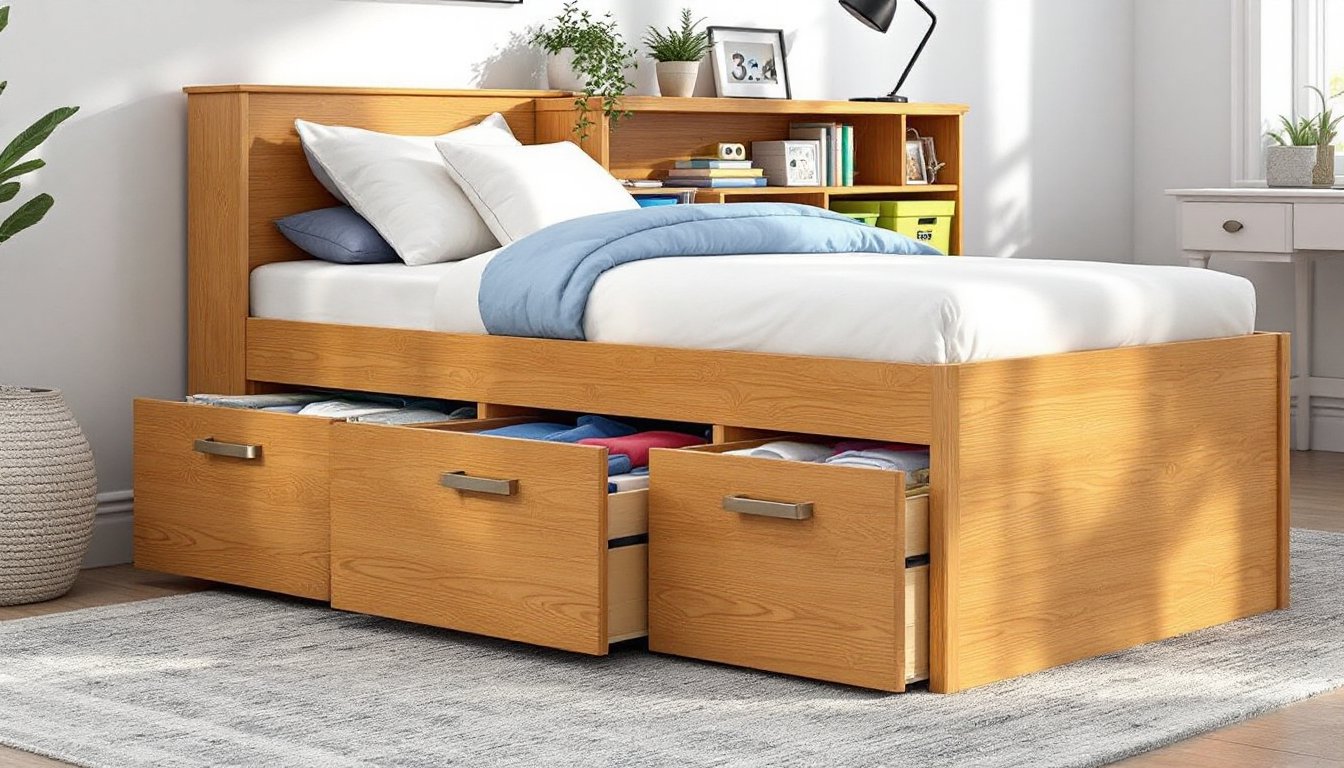

A twin captains bed with storage and bookcase headboard combines three essential bedroom elements into one compact footprint: sleeping surface, storage capacity, and organizational display. Originally designed for ship quarters where space was measured in inches, today’s captains beds have evolved into multi-functional furniture pieces ideal for kids’ rooms, guest bedrooms, college dorms, and studio apartments. Unlike a standard twin bed that wastes the area underneath, a captains bed integrates built-in drawers, cabinets, or shelving at the base while adding vertical storage through a bookcase headboard. This design eliminates the need for separate dressers, nightstands, and bookshelves, freeing up valuable floor space without sacrificing functionality.
Key Takeaways
- A twin captains bed with storage and bookcase headboard combines sleeping space, under-bed storage, and vertical shelving into a single furniture piece, reducing the need for separate dressers, nightstands, and bookshelves in small bedrooms.
- The elevated platform design (12–18 inches off the floor) provides accessible storage drawers beneath the mattress while the bookcase headboard (36–48 inches tall) organizes items within arm’s reach, recovering up to 14 square feet of floor space compared to traditional twin bed setups.
- Quality construction using solid wood with proper joinery, metal ball-bearing drawer slides, and a 400–500 pound weight capacity ensures durability for active children’s rooms and long-term use.
- Modern bookcase headboards include built-in power outlets and USB charging ports positioned in lower shelves, eliminating extension cords and centralizing device charging for contemporary bedroom organization.
- Interior dimensions matter more than external measurements when evaluating storage capacity; calculate usable cubic footage to compare drawer configurations and ensure sufficient space for the room’s specific storage needs.
- Styling a captains bed requires fitted sheets without bed skirts, throw pillows for decorative impact, and a one-third rule for headboard organization (one-third functional items, one-third décor, one-third empty space) to avoid visual clutter.
What Is a Twin Captains Bed with Storage and Bookcase Headboard?
A twin captains bed is a raised platform bed frame measuring 39 inches wide by 75 inches long (standard twin mattress dimensions) that sits higher than conventional bed frames, typically 12 to 18 inches off the floor, to accommodate storage compartments beneath the sleeping surface. The elevated design transforms otherwise-wasted space into functional storage.
The bookcase headboard component adds vertical storage at the head of the bed, featuring cubbies, shelves, or compartments typically ranging from 10 to 14 inches deep. These headboards stand 36 to 48 inches tall and provide accessible storage for books, alarm clocks, charging stations, décor items, and personal belongings within arm’s reach.
Most captains beds are constructed from solid wood (pine, oak, maple), engineered wood products (plywood, MDF), or a combination of both. Frame joinery should include corner bracing and center support rails to handle the additional weight of storage contents plus a mattress and occupant, often exceeding 400 pounds total. Quality construction includes dovetail or mortise-and-tenon drawer joinery rather than stapled particle board boxes.
The bed typically requires assembly and sits directly on the floor without a box spring. The mattress rests on a slat system, usually 1×3 or 1×4 slats spaced no more than 3 inches apart, or a solid platform, both designed to provide adequate mattress support and airflow.
Why Choose a Twin Captains Bed for Small Spaces
Small bedrooms often force a choice between sleeping space and storage space. A captains bed eliminates that compromise by stacking functions vertically instead of spreading them horizontally across the floor.
In a typical 10×10-foot bedroom, a standard twin bed plus a dresser and nightstand consumes approximately 35 square feet. A twin captains bed with bookcase headboard occupies just 21 square feet while providing equivalent or greater storage capacity. That recovered floor space makes room for a desk, play area, or simply creates better traffic flow.
For children’s rooms and teen bedrooms, captains beds grow with the occupant. The accessible storage encourages independence, kids can reach their own clothes, books, and belongings without adult assistance. The under-bed drawers keep toys and off-season clothing contained but accessible.
Dorms and studio apartments benefit from the furniture consolidation. Moving day involves one major piece instead of coordinating multiple items. The bookcase headboard replaces a nightstand while keeping essentials like phones, water bottles, and reading materials off the floor and away from accidental kicks.
Guest rooms see particular advantage in captains beds. The storage compartments hold extra linens, pillows, and blankets right where they’re needed. When the room doubles as a home office or hobby space between guest visits, the bed’s storage serves the room’s primary function without requiring furniture removal.
Storage Features That Maximize Bedroom Organization
Built-In Drawers and Under-Bed Compartments
Drawer configurations vary by manufacturer and design. The most common layouts include three to six drawers on one or both sides of the bed frame. Drawer dimensions typically measure 12 to 18 inches deep and 20 to 24 inches wide, providing space equivalent to two to four standard dresser drawers.
Quality drawer systems use metal ball-bearing slides or wooden glides with stops to prevent accidental removal. Avoid beds with plastic drawer tracks, they wear quickly under regular use and can’t support the weight of fully-loaded drawers. Soft-close slides add cost but prevent slammed fingers and reduce wear on the frame.
Some captains beds substitute open cubby storage for drawers. These compartments work well with fabric storage bins or woven baskets but don’t contain clutter as effectively as closed drawers. Cubbies suit toy storage, sports equipment, and items accessed frequently throughout the day. Many woodworking project plans include options for customizing drawer versus cubby configurations based on storage needs.
Pedestal-style captains beds eliminate side access entirely, instead featuring large storage compartments accessed by lifting the mattress platform. These hydraulic-lift or gas-spring systems provide maximum storage volume but require clearance above the bed and make daily access less convenient than drawer systems.
When evaluating drawer capacity, calculate volume in cubic feet, not number of drawers. Three deep drawers often provide more usable space than six shallow ones. Measure actual interior dimensions after accounting for frame thickness, advertised external measurements can be misleading.
Bookcase Headboard Benefits and Uses
A bookcase headboard extends the bed’s storage vertically, creating organizational zones at three heights: lower shelves for books and heavier items, mid-level compartments for daily-use objects, and upper cubbies for display or lesser-used items.
Typical headboard configurations include center compartments flanked by side shelves. The center section often features a recessed area (10 to 12 inches deep) sized for books, tablets, or a small reading lamp. Side compartments run shallower (6 to 8 inches) and work better for picture frames, small plants, or decorative objects.
Electrical integration has become standard in modern bookcase headboards. Look for designs with built-in power outlets and USB charging ports positioned in the lower shelves or along the back panel. These eliminate the need for extension cords snaking across the floor and keep device charging centralized.
The headboard’s width should match or slightly exceed the mattress width. For twin beds, headboards ranging from 41 to 48 inches wide provide adequate coverage without overwhelming the room’s visual proportions. Depth matters more than many buyers realize, headboards protruding more than 12 inches from the wall can make pillow placement awkward and create head-bumping hazards.
Backing material varies from thin plywood or hardboard to no backing at all. Backless designs allow wall access for mounting lights or accessing outlets but expose wall paint or wallpaper to scuffs and damage. Solid backing protects walls and provides a finished appearance from all angles.
Some headboards include task lighting built into the upper shelf or mounted beneath the top surface. These directed LED lights provide reading illumination without disturbing others in the room. For DIY builders, many beginner-friendly building guides include instructions for adding lighting to existing headboards using battery-operated puck lights or hardwired LED strips.
How to Select the Right Twin Captains Bed for Your Home
Start by measuring the room before shopping. Note the bed’s placement location, accounting for drawer clearance (typically 24 inches from the side where drawers open) and door swing radius. Measure the distance from floor to any overhead fixtures like ceiling fans, the bed’s total height including headboard should leave at least 36 inches clearance.
Construction quality determines longevity. Examine corner joints for metal brackets, wood blocking, or mortise-and-tenon joinery. Stapled butt joints and particle board construction won’t survive active use beyond a few years. For children’s beds that will endure jumping, climbing, and rough play, solid wood construction justifies the higher upfront cost.
Check the weight capacity listed by the manufacturer. A quality twin captains bed should support 400 to 500 pounds total (mattress, occupant, and stored items combined). Beds rated below 300 pounds often use undersized framing or insufficient center support.
Finish options affect both appearance and maintenance. Painted finishes hide wood grain and provide color flexibility but show scratches and dings more readily than stained finishes. Water-based finishes offer lower VOC emissions but less durability than traditional lacquers or polyurethanes. Unfinished beds allow customization but require finishing before use to prevent splinters and moisture damage.
For assembly requirements, captains beds typically arrive as flat-pack furniture requiring 2 to 4 hours assembly time. Review the instruction manual before purchase, some designs require two people for safe assembly, particularly when flipping or positioning heavy frame sections. Tools needed usually include a Phillips screwdriver, hammer, and possibly an Allen wrench set (often included).
Mattress compatibility matters more for platform beds than traditional frames. Memory foam and latex mattresses work well on slatted platforms. Innerspring mattresses require either closer slat spacing (maximum 2-inch gaps) or a solid platform top. Some manufacturers specify maximum mattress height to prevent interference with headboard access.
Buyers with DIY skills can build custom captains beds using free DIY furniture plans that allow material selection, dimension customization, and finish control. Building from plans typically costs 40-60% less than purchasing manufactured beds while allowing exact fitting to room dimensions and décor style. The project requires intermediate woodworking skills, a table saw or circular saw, drill, and basic hand tools.
Styling and Decorating Your Twin Captains Bed
A captains bed’s elevated profile and integrated storage create unique decorating opportunities and challenges. The bed becomes a room’s focal point, making bedding choices and headboard styling particularly important.
Bedding selection should account for the bed’s height. The mattress sits 12 to 18 inches above the floor, higher than standard frames but lower than lofted beds, placing the sleep surface at 24 to 30 inches total height. Standard bed skirts don’t work with captains beds since the storage compartments extend to the floor. Instead, use fitted and flat sheets with a comforter or duvet that hangs to just cover the mattress edge without obscuring drawer fronts.
Pillow arrangements need reconsideration with bookcase headboards. Standard sleeping pillows can’t lean against the headboard since shelving starts at mattress height. Use two sleeping pillows laid flat plus one or two decorative throw pillows for color and texture. Avoid pillow-stacking arrangements that block headboard access.
The bookcase headboard functions as a display zone but requires editing to avoid clutter. Apply the rule of thirds: fill one-third of shelf space with functional items (books, charging devices, alarm clock), one-third with decorative objects (framed photos, small plants, artwork), and leave one-third empty for visual breathing room.
Color coordination between the bed frame and room décor creates cohesion. Wood-tone beds work with warm neutral palettes and natural textures. White or painted beds suit both traditional and contemporary schemes but show scuffs more readily in high-traffic kids’ rooms. Consider drawer-front and headboard-back paint colors, some designs feature contrasting finishes between frame and storage components.
Under-bed lighting (LED strip lights mounted beneath the frame perimeter) adds ambiance while making late-night navigation safer. Motion-activated strips eliminate the need for switches and provide gentle illumination without waking the sleeper.
For rooms with multiple captains beds (shared kids’ rooms or dorm suites), individualize each bed through bedding color, headboard styling, and drawer organization rather than attempting matchy-matchy uniformity. Personal expression matters more than design magazine coordination.
Seasonal rotation keeps the bed looking fresh without major redecoration. Swap throw pillows, rotate headboard displays, and reorganize visible storage contents quarterly to maintain interest and prevent visual staleness.