

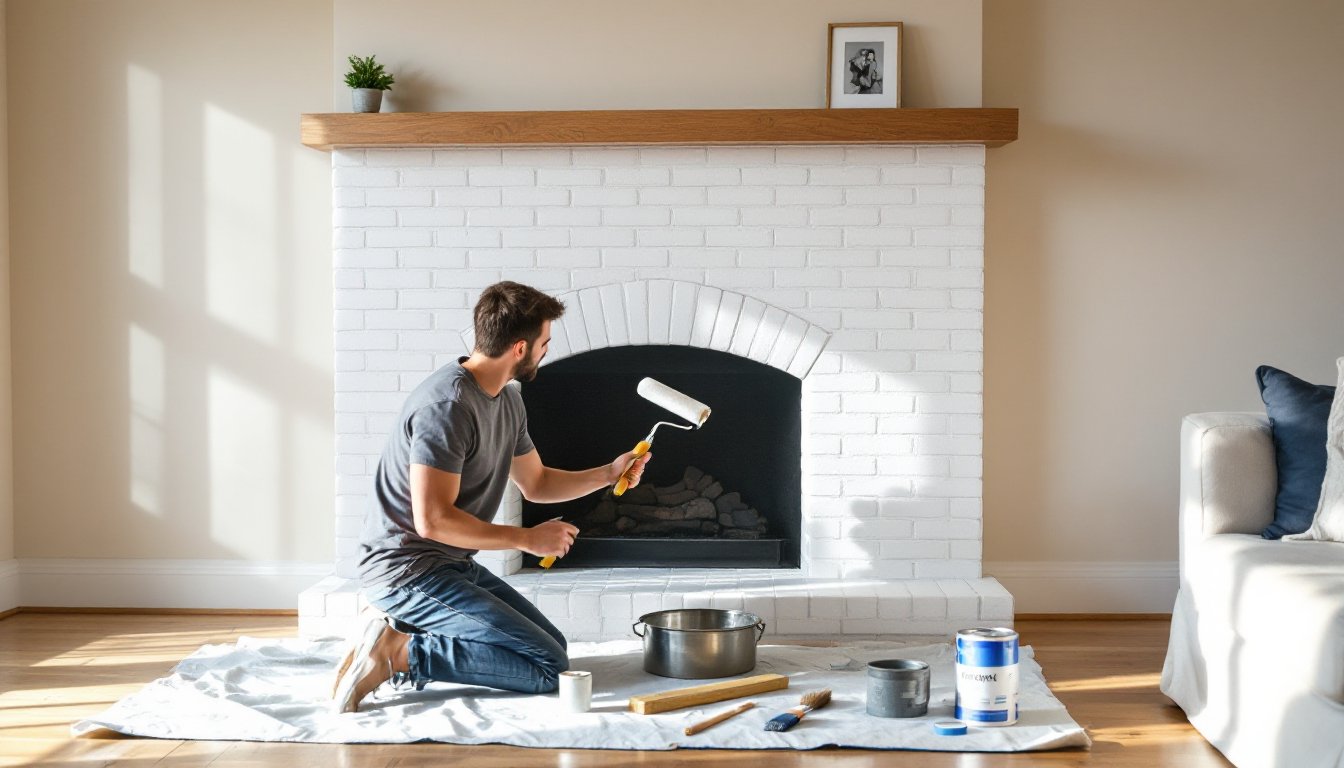

Brick fireplaces carry character, but not always the right character. That red-orange brick that dominated the ’70s and ’80s can make a room feel dated, dark, or just plain wrong for your style. Painting brick is one of the most dramatic transformations a DIYer can tackle in a weekend, no demolition required. The process isn’t complicated, but it does demand patience, the right materials, and honest prep work. Skip the prep, and the paint will fail. Do it right, and a painted brick fireplace becomes a focal point that anchors the room for years.
Key Takeaways
- Painting brick fireplace ideas transforms dated or heavy fireplaces into modern focal points, instantly brightening rooms and improving aesthetic flexibility without demolition or major renovations.
- Thorough surface preparation—including cleaning with TSP, drying completely, and applying quality masonry primer—is non-negotiable; skipping prep causes paint failure, blistering, and peeling.
- Popular painted brick fireplace colors range from timeless whites and warm neutrals to bold choices like charcoal, navy, and forest green, with color selection depending on your home’s style and natural lighting.
- Painted brick requires ongoing maintenance, especially around high-heat zones; functional fireplaces need heat-resistant paint rated for fireboxes, and expect occasional touch-ups over time.
- German schmear, whitewashing, and limewashing offer textured, rustic alternatives to solid paint finishes, creating aged or Old World looks while maintaining brick character.
- Historic or period homes should consult preservation specialists before painting brick fireplaces, as municipal codes may restrict alterations to visible historical features.
Why Paint Your Brick Fireplace?
Brick fireplaces often overpower a room with heavy, dark tones that clash with modern decor. Painting opens up design flexibility, suddenly the room feels lighter, walls work better with furniture, and the fireplace integrates instead of dominates.
Beyond aesthetics, painted brick can conceal uneven mortar repairs, water staining, or smoke discoloration that cleaning won’t touch. It’s also a cost-effective alternative to refacing with stone veneer or tile, which can run into thousands of dollars and require professional installation.
There’s one critical consideration: painting brick is permanent. While you can paint over paint, removing it later means chemical strippers, wire brushing, and potential damage to the brick surface. If the brick is historic, in excellent condition, or part of a period home, consult a preservation specialist before proceeding. Some municipalities have rules about altering visible historical features.
Painted brick also changes maintenance. Bare brick is nearly maintenance-free: painted brick will eventually need touch-ups or repainting, especially around high-heat zones if the fireplace is functional. Use heat-resistant paint rated for fireboxes if painting the interior firebox itself, standard latex won’t hold up.
Preparing Your Brick Fireplace for Painting
Prep work determines whether paint lasts two years or twenty. Brick is porous and textured, which means it grabs onto paint, but only if it’s clean and properly primed.
Start by clearing the hearth and covering floors with canvas drop cloths (plastic gets slippery and tears). Remove any mantel decor, and mask off the mantel, wall edges, and hearth with painter’s tape and rosin paper.
Cleaning is non-negotiable. Use a wire brush to remove loose mortar, soot, and debris. Then scrub the entire surface with trisodium phosphate (TSP) mixed per package directions, or a TSP substitute if your local codes restrict phosphates. Wear chemical-resistant gloves and safety goggles, TSP is caustic. Rinse thoroughly with clean water and let the brick dry completely. Depending on humidity, drying can take 24 to 72 hours. Brick holds moisture deep in its pores: if you paint over damp brick, the paint will blister and peel.
Once dry, inspect the mortar joints. If they’re crumbling or recessed more than 1/4 inch, repoint them with Type N mortar before priming. This isn’t optional, loose mortar will continue to degrade under paint, and the paint will crack along those joints.
Prime with a high-quality masonry primer or a latex primer formulated for porous surfaces. A roller with a 3/4-inch nap works well for texture: use a 2-inch angled brush for mortar lines and tight corners. Primer seals the brick, evens out absorption, and provides tooth for the topcoat. Don’t skip it. One coat is usually enough, but if the brick is dark or stained, a second coat of primer saves topcoat coverage later.
Best Paint Colors for Brick Fireplaces
Classic White and Neutral Tones
White remains the most popular choice for painted brick fireplaces, and for good reason. It brightens dark rooms, works with nearly any decor style, and gives brick texture a sculptural, high-contrast look. Bright white (like Benjamin Moore’s Chantilly Lace or Sherwin-Williams’ Pure White) creates a crisp, modern feel. For a softer, warmer effect, try off-whites and creams like Benjamin Moore’s White Dove or Sherwin-Williams’ Alabaster.
Neutral grays have become go-to alternatives. Light gray (such as Agreeable Gray or Repose Gray) adds sophistication without the starkness of white, and it hides soot or dust better over time. Greige, a gray-beige hybrid, offers warmth and pairs well with wood tones and natural textures, a smart move if the room has hardwood floors or exposed beams.
Beige and taupe tones work in traditional or transitional spaces. They add warmth without returning to the original brick color and complement earth-toned palettes. These shades also camouflage minor imperfections in the brick surface better than pure white. Many homeowners appreciate budget renovation ideas that deliver high visual impact without requiring a complete room overhaul.
Bold and Dramatic Color Choices
For those willing to take risks, bold fireplace colors create a statement focal point. Charcoal or black fireplaces have surged in popularity, especially in modern farmhouse and industrial interiors. Black painted brick adds drama and makes the fireplace recede visually while still anchoring the room. Use matte or satin finishes, gloss looks artificial on brick texture.
Navy blue and forest green bring richness and depth, especially in rooms with high ceilings or ample natural light. These work best when the surrounding walls are neutral, so the fireplace stands out without overwhelming the space. Navy pairs well with brass or gold accents: green complements natural wood and leather furniture.
Terracotta, sage, or dusty rose offer softer drama, colors that feel current but won’t date as quickly as trend-driven hues. These work especially well in eclectic or bohemian interiors. When selecting bold colors, test samples on a hidden section of brick or on large poster boards placed near the fireplace. Brick texture changes how color reads compared to a smooth wall, and lighting throughout the day will shift the appearance. Expert sources like Bob Vila often recommend living with sample colors for at least a week before committing.
Popular Painting Techniques and Finishes
A solid, opaque finish is the most straightforward approach, prime, then apply two coats of latex or acrylic paint in a satin or matte sheen. Satin offers easier cleaning: matte hides imperfections. Use a roller for flat areas and a brush for joints. Expect to use about one gallon of paint per coat for an average-sized fireplace (roughly 50-70 square feet of brick surface). Paint coverage on brick is lower than on drywall due to texture and absorption.
German schmear (or mortar wash) creates a whitewashed, Old World look by smearing thinned mortar or joint compound over the brick, leaving some brick color visible. Mix Type N mortar or premixed joint compound with water to a peanut butter consistency, then apply with a trowel or gloved hands, working in small sections. Wipe excess with a damp sponge before it sets. This technique is forgiving and adds rustic texture, but it’s messy, wear old clothes and expect cleanup.
Whitewashing or limewashing offers a translucent finish that lets brick texture and subtle color variations show through. Traditional limewash is made from slaked lime and is breathable, which is ideal for older brick. It ages and patinas naturally. Diluted latex paint can mimic the look (mix one part paint to one part water), but it won’t have limewash’s authentic texture or breathability. Apply with a brush, working paint into joints, then wipe back with a rag for the desired opacity. Multiple thin coats build up coverage while maintaining translucency. This technique suits homeowners who want a softer, aged appearance rather than a solid color change. Enthusiasts of room transformations often favor whitewashing for its forgiving, layered aesthetic.
Stenciling or two-tone treatments add pattern without losing the brick. Paint the entire fireplace a base color, then use a stencil or painter’s tape to add geometric patterns, stripes, or contrasting mortar lines. This works best in playful, eclectic spaces, it’s not subtle, but it’s a creative way to customize a fireplace for bold personalities.
Finish choice matters. Matte hides flaws and gives a soft, modern look. Satin is more durable and easier to clean, a better pick for functional fireplaces or homes with kids and pets. Gloss is rarely appropriate on brick, it looks plasticky and emphasizes every texture irregularity.
Conclusion
Painting a brick fireplace is one of the highest-impact, lowest-cost renovations a homeowner can tackle. It requires patience, honest prep, and the right materials, but no advanced skills. Whether choosing timeless white, a bold charcoal, or a textured limewash, the key is thorough surface prep and quality primer. Take your time, follow the steps, and the result will anchor your room for years.