

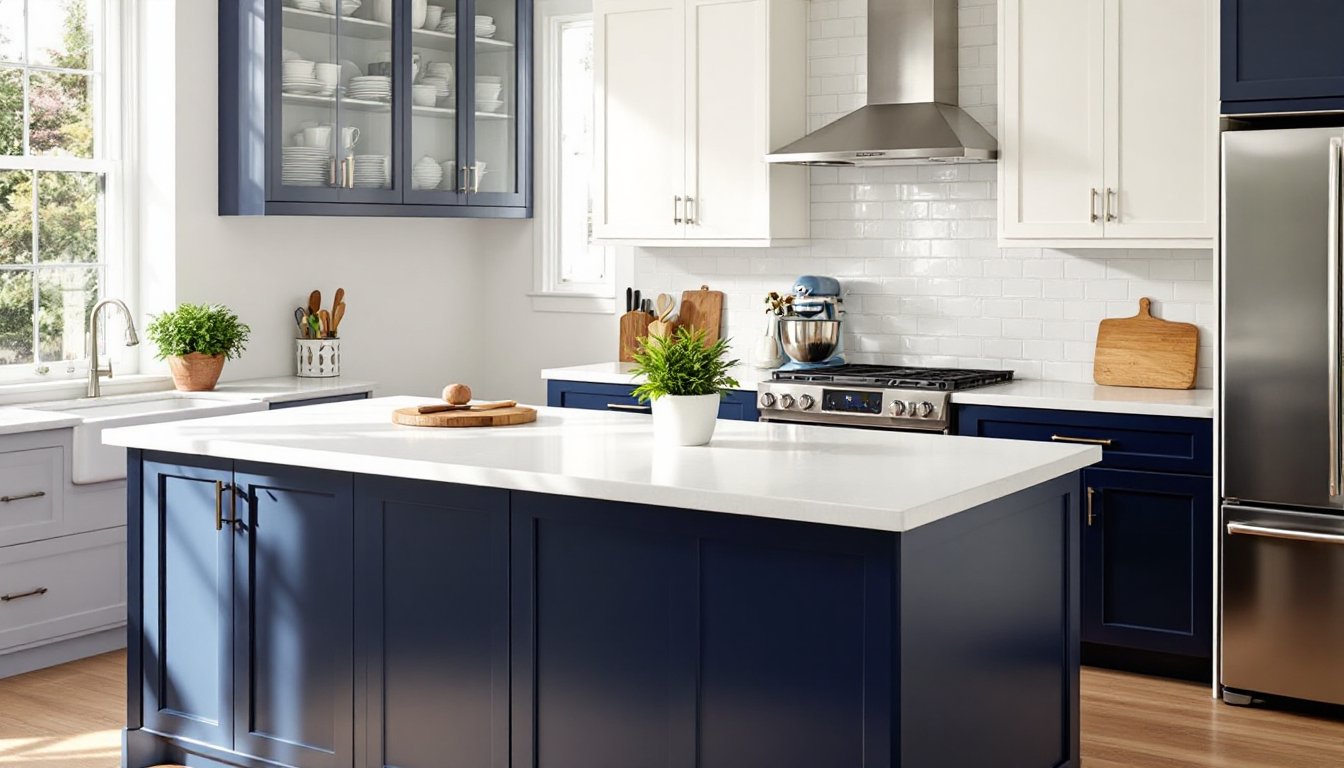

Painting kitchen cabinets in two tones is one of the most effective ways to add depth, contrast, and personality to a kitchen without a full remodel. Instead of committing to a single color that can feel flat or monotonous, a two tone approach creates visual interest by pairing complementary or contrasting hues on upper and lower cabinets, or by highlighting an island in a bold accent color. This technique works in traditional, modern, and transitional kitchens alike, and the project is well within reach for DIYers who are comfortable with prep work, patience, and a decent spray gun or quality brush. Done right, two tone cabinets deliver a custom, high-end look at a fraction of the cost of replacement.
Key Takeaways
- Two tone painting kitchen cabinets adds depth and personality to any kitchen style while delivering a custom, high-end look at a fraction of the cost of a full remodel.
- The classic approach of pairing dark lower cabinets with light uppers creates visual stability, hides wear, and keeps the space feeling open and airy.
- Proper preparation—including cleaning, sanding, and applying bonding primer—is essential to ensure durable, long-lasting results that won’t chip or peel within months.
- Test paint samples on actual cabinet doors under different lighting conditions for 48 hours before committing, as paint behaves differently on vertical surfaces and under task lighting.
- Popular 2026 color combinations include white with navy, sage green with cream, charcoal with crisp white, and muted forest green with warm white—all offering staying power without dating quickly.
- Plan for a multi-day project with proper curing time of 7–14 days for water-based paints, and avoid heavy use during the cure period to maximize durability.
Why Two Tone Kitchen Cabinets Are Transforming Modern Kitchens
Two tone cabinets solve a common design problem: kitchens often lack focal points. A single cabinet color can blend into the walls and backsplash, especially in open-concept layouts where the kitchen flows into the dining or living area. By introducing a second color, homeowners create natural zones, dark lowers ground the space and hide wear near the floor, while lighter uppers keep the room feeling open and airy.
From a practical standpoint, two tone painting lets DIYers experiment with bolder colors without overwhelming the room. A deep navy or forest green on lower cabinets feels dramatic but manageable when balanced with white or cream uppers. It’s also a smart way to work with existing elements: if countertops, flooring, or appliances limit color choices, a two tone scheme offers flexibility to tie everything together.
The trend has staying power because it’s rooted in function, not just aesthetics. Kitchens see heavy use, and darker tones on base cabinets camouflage scuffs, fingerprints, and splashes better than all-white cabinetry. Meanwhile, lighter uppers reflect natural light and prevent the space from feeling closed in, especially important in kitchens with soffits or lower ceilings. This approach also increases resale appeal: buyers appreciate the custom look without the risk of overly personal or trendy choices.
Choosing the Perfect Color Combination for Your Two Tone Cabinets
Color selection makes or breaks a two tone cabinet project. The goal is contrast without clash, colors should feel intentional, not random. Start by assessing fixed elements: countertops, backsplash tile, flooring, and appliances. Pull paint chips that complement these materials rather than fight them. If there’s warm oak flooring, cooler grays and blues may look disjointed: warmer greens, taupes, or creams will feel more cohesive.
Consider the room’s natural light. North-facing kitchens tend to read cooler and may benefit from warmer paint tones (soft whites with cream undertones, warm grays, sage greens). South-facing kitchens get warmer light, so cooler tones like true whites, pale grays, and blue-greens stay crisp without turning yellow.
Test samples on actual cabinet doors, not just walls. Paint behaves differently on vertical surfaces and under task lighting. Apply two coats of each sample color to a door or drawer front, let it cure for 48 hours, then live with it for a few days. Check the colors in morning, midday, and evening light before committing to five gallons of paint.
Popular Two Tone Cabinet Color Pairings for 2026
Classic pairings remain popular because they work across multiple kitchen styles. White uppers with navy lowers deliver timeless contrast and suit both coastal and traditional kitchens. Cream or off-white uppers with sage green lowers bring warmth and a nod to the ongoing interest in earthy, organic tones that define transitional and farmhouse aesthetics.
For a modern edge, charcoal or black lowers paired with light gray or crisp white uppers create high contrast without feeling stark. This combo works especially well in kitchens with stainless steel appliances and quartz countertops. Warm taupe lowers with white uppers offer subtlety and versatility, making it easier to update hardware, backsplash, or decor down the line.
Bolder DIYers are leaning into deep forest green or charcoal blue lowers with pale blush or warm white uppers, a pairing that feels fresh but not trendy. Avoid overly saturated or neon tones, they date quickly and are harder to repaint if preferences shift. Stick to colors with staying power: muted, complex hues with multiple undertones age better than flat, one-note shades.
How to Decide Which Cabinets to Paint Each Color
The most common approach is dark lowers, light uppers. This grounds the kitchen visually and aligns with how the eye naturally scans a room, heavier tones at the bottom feel stable, while lighter tones at eye level and above keep the space open. It’s also practical: lower cabinets take more abuse from kids, pets, and daily cooking, and darker colors hide scuffs better.
If there’s an island, it’s a prime candidate for the accent color. Painting the island a bold or contrasting hue turns it into a focal point without committing the entire kitchen to that color. Pair a dark island (navy, charcoal, deep green) with lighter perimeter cabinets, or reverse it, go light on the island if the rest of the kitchen skews darker.
Some kitchens benefit from a vertical split instead of horizontal. If there’s a bank of cabinets flanking a window, range, or sink, painting that section a different color can highlight architectural features or create symmetry. This works best in kitchens with distinct zones or when cabinetry wraps around corners.
Avoid splitting colors mid-run on a single wall, it can look unfinished or arbitrary. Transitions should happen at natural breaks: where upper and lower cabinets meet, at an island, or where cabinetry changes height or depth. If the kitchen has glass-front cabinets or open shelving, keep those in the lighter tone to maintain visual continuity and avoid a choppy look.
Finally, consider hardware and hinges. If existing hardware is staying in place, choose paint colors that complement the finish, brushed nickel pairs well with cool grays and blues, while brass or bronze looks better with warmer whites, greens, and taupes. Mixing metal finishes is an option, but it’s easier to pull off when cabinet colors provide a unifying thread.
Step-by-Step Guide to Painting Kitchen Cabinets Two Tones
Painting kitchen cabinets is a multi-day project. Rushing leads to drips, uneven coverage, and premature wear. Plan for at least a long weekend, longer if working around meals and kids. Clear the workspace, set up a ventilated area for drying doors and drawer fronts, and commit to the process.
Materials and Tools:
- Deglosser or TSP (trisodium phosphate) for cleaning and dulling glossy finishes
- Sanding block or orbital sander, 120-grit and 220-grit sandpaper
- Tack cloths or microfiber rags
- Bonding primer (such as Zinsser Bulls Eye 1-2-3 or KILZ Adhesion)
- Cabinet-grade paint in two colors (alkyd enamel or acrylic urethane for durability)
- HVLP sprayer, foam roller (4″ or 6″), or high-quality angled brush (2″ to 2.5″)
- Painter’s tape, drop cloths, and plastic sheeting
- Painter’s pyramids or a drying rack
- PPE: safety glasses, respirator or N95 mask, gloves, and ear protection if using a sprayer
Preparing and Priming Your Kitchen Cabinets
Remove all doors, drawer fronts, and hardware. Label each piece with painter’s tape and a number corresponding to its location, this saves headaches during reinstallation. Remove hinges and set them aside: if they’re worn or don’t match the new look, now’s the time to replace them.
Clean every surface with deglosser or a TSP solution to remove grease, cooking residue, and silicone buildup. Kitchens accumulate a surprising amount of grime, and paint won’t adhere to oily surfaces. Wipe down cabinet boxes, doors, and drawer fronts, then let everything dry completely, at least 30 minutes.
Sand all surfaces with 120-grit sandpaper to rough up the existing finish and create mechanical adhesion. The goal isn’t to strip the finish entirely, just to dull the sheen so primer has something to grip. Many DIYers find this tedious but critical step is what separates a durable finish from one that chips within months. After sanding, wipe everything down with a tack cloth to remove dust.
Apply bonding primer to all surfaces. Primer is non-negotiable for cabinet painting, it seals stains, blocks tannin bleed (especially on oak or cherry), and ensures uniform topcoat adhesion. Use a foam roller for flat surfaces and an angled brush for detailed areas like panel insets and edges. Spraying primer is faster and yields the smoothest finish, but requires proper ventilation and masking. Let primer dry according to the manufacturer’s instructions, usually 1–2 hours, then lightly sand with 220-grit sandpaper to knock down any raised grain or dust nibs. Wipe clean with a tack cloth.
Painting Techniques for a Professional Finish
Start with the color that covers the most surface area, this is usually the lighter tone on upper cabinets or perimeter boxes. Apply thin, even coats using a foam roller, HVLP sprayer, or brush. Thin coats are key: thick applications sag, leave brush marks, and take forever to cure. Two or three light coats beat one heavy coat every time.
If rolling, work in one direction per coat (vertical on the first coat, horizontal on the second) to minimize texture. If brushing, use long, smooth strokes and feather out any edges to avoid visible starts and stops. Experienced painters recommend back-rolling or back-brushing to smooth out any texture left by the initial application. An HVLP sprayer delivers the most professional finish but requires practice, test on cardboard or scrap until the spray pattern is even and the paint flows without sputtering.
Let the first coat dry fully, typically 4–6 hours for water-based paints, longer for oil-based. Don’t rush: tacky paint attracts dust and lint. Lightly sand between coats with 220-grit paper, then tack off dust. Apply a second coat, and evaluate once dry. If the underlying primer or wood shows through, add a third coat.
Once the first color is fully cured (check the paint can, cure time can be 24–72 hours), mask off painted areas with painter’s tape and plastic sheeting. Apply the second color to the remaining cabinets, using the same technique: thin coats, proper dry time, light sanding between coats. Be meticulous with tape placement, crisp lines between colors make or break the two tone effect.
After the final coat cures, carefully remove all tape and inspect for any bleeding or rough edges. Touch up as needed with a small brush. Reinstall hardware and rehang doors and drawer fronts, checking alignment as you go. Cabinet doors may need hinge adjustments after multiple paint layers: keep a screwdriver handy and tweak as necessary.
Curing matters. Even if paint feels dry to the touch, full cure takes 7–14 days for water-based paints and up to 30 days for oil-based. During this time, avoid slamming doors, stacking dishes directly on shelves, or scrubbing surfaces. Let the paint harden fully for maximum durability. Once cured, painted cabinets can handle daily use, but they’ll never be as impact-resistant as factory finishes, take care with heavy pots and sharp-edged items.