

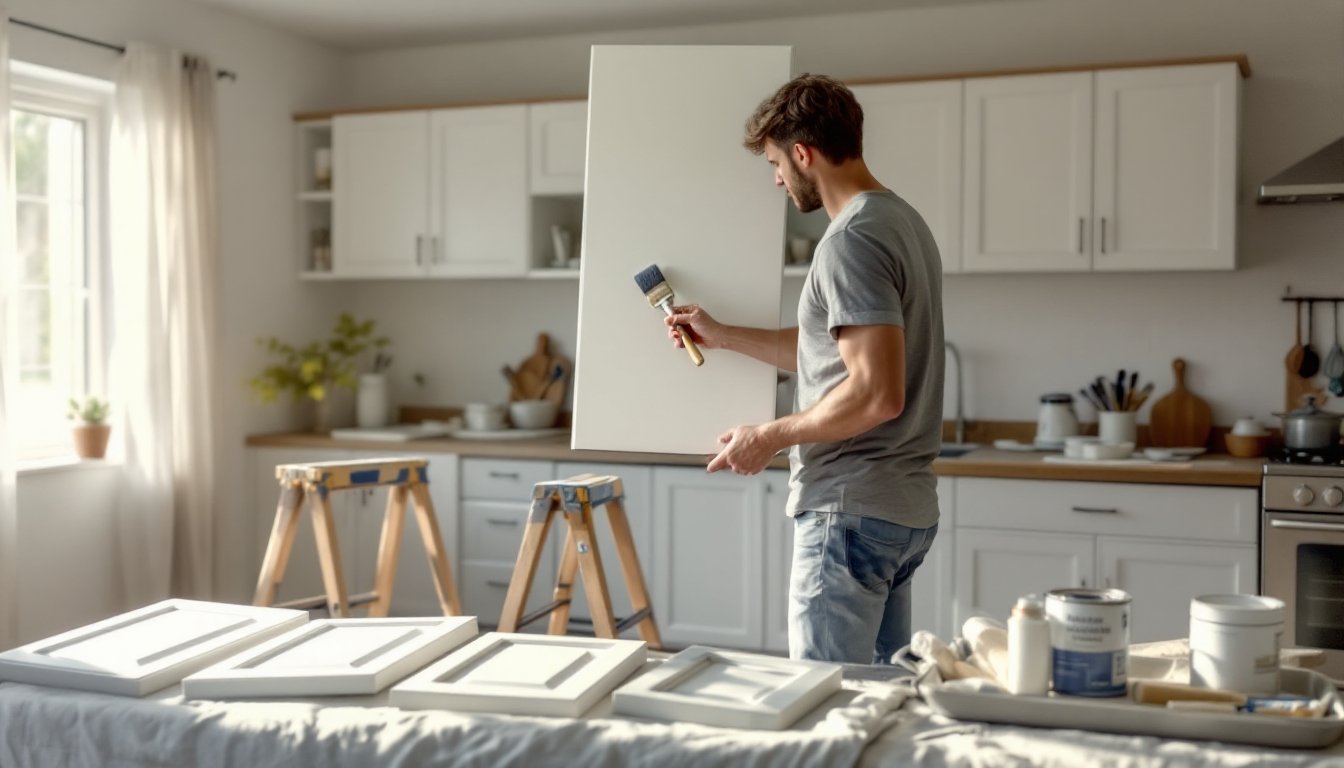

A kitchen remodel can easily run $20,000 or more, but painting existing cabinets costs a fraction of that, typically $200 to $600 in materials, and delivers a dramatic transformation. The catch? It’s not a weekend project. Proper prep, patience between coats, and the right products separate a professional-looking finish from one that chips in six months. This guide walks through the full process, from degreasing decades-old buildup to choosing paint that can handle daily wear. Expect to invest 3–5 days of work, but the payoff is a kitchen that looks custom without the custom price tag.
Key Takeaways
- Painting kitchen cabinets costs $200–$600 in materials for a DIY project versus $4,000–$20,000 for full replacement, delivering dramatic transformation at a fraction of the price.
- Proper prep work—including TSP degreasing, sanding, and bonding primer application—determines durability and prevents peeling within months.
- Invest in cabinet-grade paint like acrylic-alkyd hybrids or 100% acrylic latex with satin or semi-gloss sheen to handle daily wear, grease splatter, and moisture better than standard wall paint.
- Allow 7–14 days for full paint cure before reassembling cabinets and avoid using them heavily for at least 3–5 days to prevent finish damage.
- High-quality brushes, foam rollers, and optional HVLP sprayers produce professional results, while cheap tools leave bubbles and brush marks that undermine the entire project.
Why Paint Your Kitchen Cabinets Instead of Replacing Them?
Cabinet replacement costs $4,000 to $20,000 depending on kitchen size and material quality. Painting existing cabinets in good structural condition runs $200 to $600 in materials if doing it yourself, or $1,500 to $4,000 if hiring a professional.
The math makes sense when cabinet boxes, doors, and drawer fronts are solid wood or plywood with intact joinery. If hinges are pulling loose, veneer is peeling, or particleboard is swollen from water damage, paint won’t fix structural problems. Those cases require replacement or extensive repair before painting.
Painting also allows homeowners to keep existing cabinet layout and dimensions. Replacing cabinets often involves drywall repair, electrical work, and plumbing adjustments if new boxes don’t match old footprints. Painting preserves the current configuration while updating color and finish.
Environmental impact matters too. Tearing out functional cabinets sends hundreds of pounds of material to landfills. Painting extends the life of existing cabinetry by a decade or more with proper maintenance.
The project does demand time. Rushed jobs show brush marks, drips, and poor adhesion. Many budget home makeovers feature painted cabinets as a centerpiece, but those results come from methodical prep work and multiple thin coats rather than shortcuts.
Essential Tools and Materials You’ll Need
Gather everything before starting. Mid-project hardware store runs waste hours and disrupt workflow.
Materials:
- TSP (trisodium phosphate) or TSP substitute for degreasing
- 120-grit and 220-grit sandpaper or sanding sponges
- Bonding primer (oil-based or shellac-based for best adhesion on glossy surfaces)
- Cabinet paint (acrylic-alkyd hybrid or 100% acrylic latex in satin or semi-gloss)
- Wood filler for dings and hardware holes
- Painter’s tape (1.5-inch or 2-inch)
- Drop cloths (canvas holds up better than plastic)
- Mineral spirits or denatured alcohol for final wipe-down
Tools:
- Screwdriver or drill/driver for removing hardware and doors
- Putty knife for applying filler
- Sanding block or orbital sander (orbital saves time but requires care around edges)
- Tack cloth or microfiber rags for dust removal
- High-quality synthetic brushes (2-inch angled for edges, 1-inch for tight spots)
- Foam rollers (4-inch) for door panels and drawer fronts
- Paint sprayer (optional but speeds the process: HVLP models work well indoors)
Safety Gear:
- Nitrile gloves for chemical handling
- Safety goggles during sanding and spraying
- Dust mask or N95 respirator for sanding
- Respirator with organic vapor cartridges if using oil-based products or spraying
A paint sprayer isn’t required, but it eliminates brush marks on flat door panels. HVLP (high-volume, low-pressure) models produce less overspray than airless sprayers, making them better for indoor work. Expect to spend $100 to $150 on a decent entry-level unit.
Skip cheap foam brushes. They leave bubbles and don’t hold enough paint. Invest in Purdy or Wooster brushes, they release paint smoothly and last through multiple projects if cleaned properly.
Preparing Your Cabinets for a Flawless Finish
Prep determines durability. Paint adheres to clean, slightly roughened surfaces. Skip these steps, and the finish will peel within months.
Cleaning and Degreasing
Kitchen cabinets accumulate grease, cooking oils, and grime, especially near the stove. Standard cleaners won’t cut it. Mix TSP or a TSP substitute (safer for septic systems and less caustic) according to package directions. Typically, it’s 1/4 cup per gallon of warm water.
Wear nitrile gloves. Scrub all surfaces with a sponge or microfiber cloth, paying extra attention to areas around handles and the top edges of upper cabinets where grease drifts. Rinse with clean water and let dry completely, at least four hours, preferably overnight.
For stubborn buildup, use denatured alcohol on a clean rag after the TSP wash. This step also helps paint adhere to older finishes that may have silicone or wax residue.
Remove all doors, drawer fronts, and hardware. Label each piece with painter’s tape and a marker (e.g., “upper left door,” “top drawer front”). Photograph cabinet interiors with doors open before removal, it helps during reinstallation if hinge placement is unclear.
Sanding and Priming
Sanding creates a mechanical bond for primer. Use 120-grit sandpaper to scuff existing finish. The goal isn’t stripping down to bare wood, just dulling the glossy surface. An orbital sander speeds the process but can burn through veneer on edges if you’re not careful. Hand-sanding with a sanding block gives more control.
After sanding, vacuum dust, then wipe everything with a tack cloth or damp microfiber rag. Any remaining dust will show as bumps in the finish.
Fill dents, scratches, or old hardware holes with wood filler. Let dry per manufacturer’s directions (usually 30 minutes to 2 hours), then sand smooth with 220-grit sandpaper.
Apply bonding primer. Oil-based or shellac-based primers (like Zinsser BIN) stick to glossy surfaces better than water-based options and block tannin bleed on oak or cherry. Use a brush for cabinet frames and a foam roller for door panels. Many DIY furniture projects rely on primer to cover dark stains or uneven surfaces, it’s not optional.
Primer dries in 1–2 hours but cure overnight before painting for best results. Lightly sand with 220-grit after primer dries to knock down any raised grain or dust nibs. Wipe clean with a tack cloth.
Choosing the Right Paint and Color for Your Kitchen
Not all paint is cabinet-grade. Cabinets endure more abuse than walls, constant handling, grease splatter, and moisture.
Acrylic-alkyd hybrids (like Benjamin Moore Advance or Sherwin-Williams Emerald Urethane Trim Enamel) combine the durability of oil-based paint with the easy cleanup of latex. They level well (brush marks self-smooth) and cure to a hard, scrubbable finish.
100% acrylic latex cabinet paint works if you’re patient with multiple coats and gentle during the cure period. It dries faster than alkyd hybrids but doesn’t level as smoothly. Expect to apply three coats instead of two.
Avoid standard wall paint. It doesn’t have the hardness or adhesion needed for high-touch surfaces. Even “scrubbable” wall paints chip on cabinet edges.
Sheen matters. Satin or semi-gloss finishes resist moisture and wipe clean without showing every fingerprint. Flat or matte paint looks sophisticated but shows wear quickly in kitchens. High-gloss highlights imperfections unless surface prep is flawless.
Color choices depend on kitchen size and lighting. White and off-white (Benjamin Moore’s White Dove or Sherwin-Williams’ Alabaster) brighten small kitchens and pair with any countertop. Darker colors (navy, charcoal, forest green) add drama but require perfect prep, flaws show more on dark surfaces.
Test colors in your space. Paint sample boards (foam core or poster board) and view them at different times of day. North-facing kitchens skew cooler: south-facing lean warmer. What looks crisp in the store can read gray or yellow at home.
Cabinet paint covers approximately 350–400 square feet per gallon. A typical 10×10 kitchen with standard upper and lower cabinets needs about 1.5–2 gallons of paint plus 1 gallon of primer. Buy an extra quart for touch-ups.
Step-by-Step Painting Process for Professional Results
Work in a well-ventilated space. Open windows and run a fan, especially if using oil-based primer or spraying.
1. Set up a painting station. Lay doors flat on sawhorses or a table covered with drop cloths. Paint horizontal surfaces to avoid drips. Stack painted doors on edge using scrap wood spacers, don’t lean them against walls while wet.
2. Start with cabinet boxes. Tape off walls, countertops, and appliances. Use a 2-inch angled brush to cut in around hinges, edges, and corners. Follow with a foam roller on flat areas. Apply thin coats, thick layers sag and take longer to cure.
3. Paint doors and drawer fronts. If using a brush and roller, paint in this order: edges first, then the back side, let dry, flip, and paint the front. Start with recessed panels (if any), then paint raised frames or flat surfaces. Brush in the direction of the wood grain. Many paint tutorials show how brushing technique affects the final look, long, even strokes prevent lap marks.
If using a sprayer, thin paint per manufacturer’s instructions (usually 10% water for latex, mineral spirits for oil-based). Hold the gun 10–12 inches from the surface and move in steady, overlapping passes. Practice on cardboard first.
4. Apply multiple thin coats. Two coats minimum, three if coverage isn’t opaque. Let each coat dry per can instructions, typically 2–4 hours for latex, 6–8 for alkyd hybrids. Light sanding with 320-grit sandpaper between coats smooths out dust nibs. Wipe with a tack cloth before the next coat.
5. Let paint cure before reassembling. Paint feels dry to the touch in hours but takes 7–14 days to fully cure. Wait at least 3–5 days before reinstalling doors and 7 days before closing them firmly or stacking dishes inside. Rushing this step causes finish damage, paint can stick to itself or peel when stressed.
6. Reinstall hardware and doors. If old hinges are worn, replace them. New hinges cost $2–$5 each and eliminate slop. Use your reference photos and labels to put doors back in the right spots. Adjust hinges so doors close flush and gaps are even.
Maintenance: Wipe spills immediately. Use mild dish soap and water, avoid abrasive cleaners or scouring pads for at least a month while paint fully hardens. Touch up chips with leftover paint and a small artist’s brush.
Painted cabinets hold up well with proper prep and quality materials, but they’re not indestructible. Expect minor touch-ups every few years in high-traffic areas. That’s still far cheaper than replacement.