

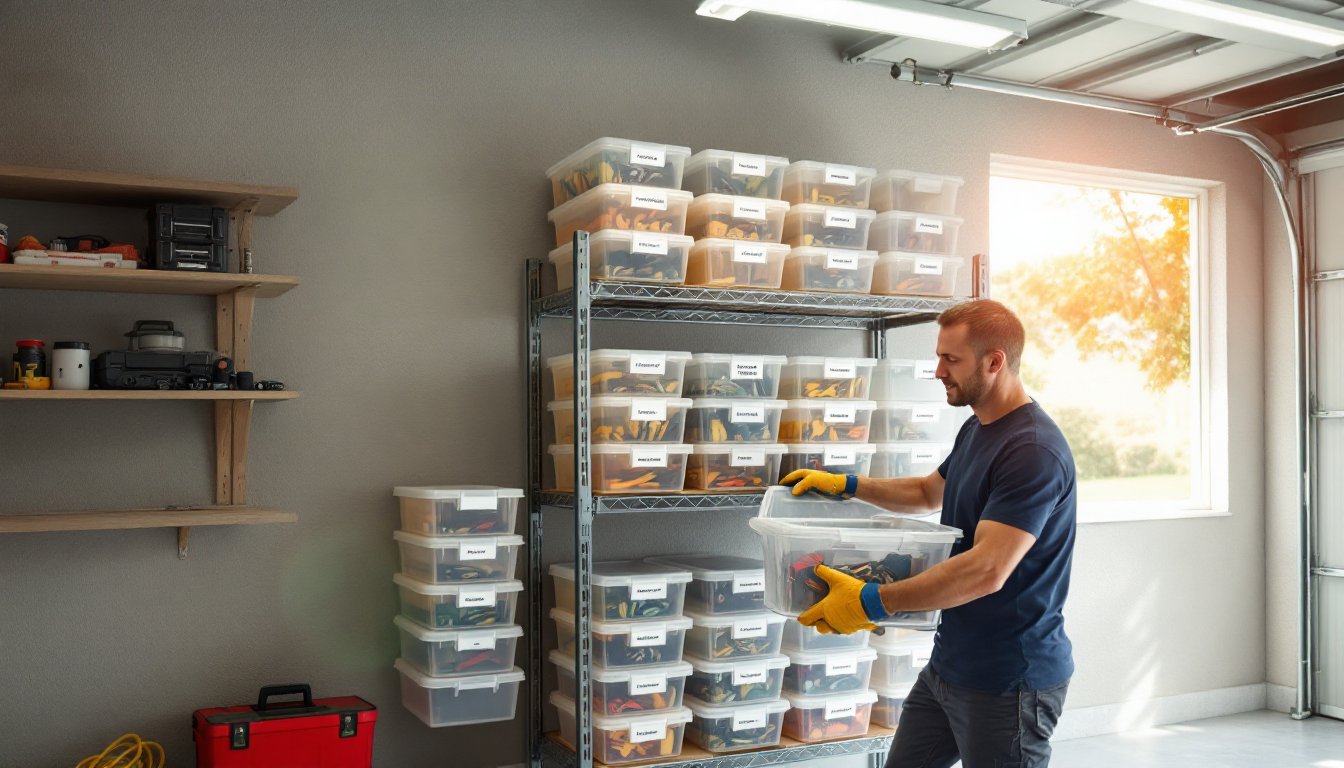

Uline doesn’t market to homeowners, they’re a shipping and industrial supply giant. But savvy DIYers and organizers have caught on: the same bins that survive warehouse floors handle garage clutter, craft supplies, and basement storage without breaking a sweat. Uline storage bins bring commercial-grade durability to residential chaos, with sizing and materials that put big-box store options to shame. They’re built thicker, stack steadier, and last years longer than the flimsy alternatives. If you’re tired of cracked lids and collapsed bins, this guide walks through what makes Uline different, which types suit specific jobs, and how to put them to work throughout your home.
Key Takeaways
- Uline storage bins offer commercial-grade durability with thicker walls (2-3mm) and precision lids that outperform standard retail bins by years, making them a long-term investment despite higher upfront costs.
- Different bin types serve specific purposes: stackable totes for seasonal items, flip-top bins for frequent access, clear containers for quick inventory, and gasket-lid bins for moisture-sensitive archival storage.
- Choosing the right Uline storage bin requires matching load capacity, interior dimensions, and lid style to your specific contents and storage environment before purchasing.
- Label bins on multiple sides, store frequently accessed items at waist height, and stack heavier bins below lighter ones to maximize organization efficiency and safety.
- Clear bins save time in active spaces like workshops and pantries by letting you see contents without opening lids, while opaque bins with gasket seals protect long-term storage from dust and pests.
What Makes Uline Storage Bins Stand Out for Home Organization
Uline storage bins are engineered for industrial use, which translates to serious advantages at home. The high-density polyethylene (HDPE) construction resists impact, moisture, and temperature swings better than typical residential bins. Wall thickness matters, Uline’s injection-molded bins often measure 2-3mm thick, compared to 1mm or less on budget alternatives. That extra material prevents flex, warping, and the dreaded spontaneous cracking mid-stack.
Lid fit is another differentiator. Uline uses precision tooling for tight tolerances, so lids snap securely without gaps. This keeps dust, pests, and moisture out, critical for basement or attic storage where humidity and critters are constant threats. Many models feature reinforced corners and ribbed sidewalls for stacking stability. Stack six or eight bins high, and they won’t bow or lean like cheaper totes.
Sizing runs more granular than retail options. Instead of vague “large” or “medium,” Uline lists exact interior dimensions in inches, plus load capacity ratings. A bin rated for 50 lbs won’t fail at 51. This precision helps with planning shelving and calculating how many bins fit a specific space. While Uline bins cost more upfront, often $10-30 per unit versus $5-15 for retail totes, they outlast cheaper bins by years, making the per-use cost lower over time.
Types of Uline Storage Bins for Every Room and Purpose
Uline’s catalog runs deep. Homeowners typically focus on a few categories that translate well from warehouse to household use.
Stackable Bins and Totes
Stackable bins with attached lids dominate garage and basement organization. These molded-in-one-piece designs prevent lost lids and stack uniformly. Models like Uline’s “Stack and Nest” totes collapse when empty, saving storage space, a plus if you rotate seasonal decorations or camping gear. Wall thickness on these runs 2-2.5mm, and they handle temperature extremes without becoming brittle. Use them for tools, automotive supplies, sports equipment, or bulk pantry overflow.
Flip-top bins offer quicker access than full lids. The hinged design works well for frequently accessed items: craft supplies, kids’ toys, or pet food. Look for models with latch reinforcements, cheap flip-tops fail at the hinge after repeated use. Uline’s industrial-grade hinges and latches withstand hundreds of open-close cycles.
Lidded totes with separate snap-on lids provide the most secure seal. They’re ideal for long-term attic or crawl space storage where dust and insects are concerns. Gasket-style lids (available on some Uline models) offer near-airtight seals, protecting textiles, documents, or electronics from moisture. These bins often accommodate 25-50 gallon capacity, suitable for bedding, holiday decorations, or archive boxes.
Clear Storage Containers
Clear polypropylene bins let you identify contents without opening lids, a time-saver in a packed storage room. Uline’s clear bins use UV-stabilized polypropylene to resist yellowing and brittleness from sunlight exposure. This matters for garage storage near windows or outdoor sheds.
Transparent containers shine for organizing spaces where you need to see inventory at a glance: pantries, craft rooms, or workshops. Many include label holders molded into the front, so contents stay identified even if lighting is poor. For small parts, fasteners, electrical components, craft beads, Uline’s clear compartment boxes with adjustable dividers prevent mixing and make finding the right size screw or bead immediate.
Clear bins typically cost 20-30% more than opaque versions due to material and manufacturing differences. Weigh visibility benefits against budget. For long-term attic storage, opaque bins work fine. For an active workshop or pantry, clear bins pay dividends in saved time and reduced frustration, echoing many of the organizing principles professionals recommend.
How to Choose the Right Uline Storage Bins for Your Needs
Start with load requirements. Uline lists weight capacities per bin and per stack. A bin rated for 50 lbs individually might support only 150 lbs when three are stacked. Overloading causes warping, cracked corners, or collapsed stacks, especially with cheaper bins. Calculate the actual weight of contents: a bin of hardcover books or hand tools easily hits 40-50 lbs.
Interior dimensions matter more than exterior. A bin advertised as “27 gallons” might have interior dimensions of 23 x 15 x 12 inches, but external dimensions of 27 x 17 x 13 inches. Measure your shelving or storage area interior dimensions, then match bins with 1-2 inches clearance for easy removal. Uline’s spec sheets provide both measurements clearly.
Consider lid style based on access frequency. Attached lids (flip-top or hinged) suit daily-use bins. Separate snap-on lids work for seasonal or archival storage where you open them once or twice a year. Locking lids with clasps add security, useful for bins storing valuables, chemicals, or items you want child-proofed.
Material choice depends on environment. Standard HDPE handles -20°F to 120°F, fine for most residential settings. For extreme cold (unheated garages in northern climates), look for cold-resistant polyethylene rated to -40°F. For outdoor sheds with direct sun, UV-stabilized bins prevent degradation.
Finally, calculate cost per cubic inch if budget is tight. Larger bins cost more upfront but often deliver better value per volume. A 50-gallon bin might cost $30 versus $12 for a 15-gallon bin, but you’d need four of the smaller bins to match capacity, and they’d cost $48 total.
Creative Ways to Use Uline Storage Bins Throughout Your Home
Garage and workshop: Use clear bins for sorting fasteners, drill bits, and electrical supplies by size and type. Mount smaller bins on pegboard or shelving for visibility and quick access. Larger stackable totes handle seasonal items: summer camping gear, winter car supplies, or holiday decorations. Label each bin clearly on multiple sides so contents are identifiable from any angle.
Basement storage: Opaque bins with gasket lids protect textiles and documents from moisture and pests. Store off-season clothing, extra linens, or archived paperwork. Elevate bins on wire shelving (not directly on concrete floors) to allow airflow underneath and prevent moisture wicking. Similar strategies appear in many home storage guides focused on seasonal rotation.
Pantry overflow: Clear flip-top bins corral bulk purchases, flour, sugar, rice, or pet food. The airtight seal keeps contents fresh and prevents pantry moths. Smaller clear bins with dividers organize baking supplies, spice packets, or snack bars. Stackable bins maximize vertical space in deep pantry closets.
Craft room: Clear compartment boxes keep beads, buttons, threads, and small tools sorted and visible. Larger totes store fabric, yarn skeins, or scrapbooking paper. Snap-on lids keep dust off infrequently used supplies while flip-tops suit daily-access items.
Kids’ rooms: Durable bins withstand rough handling. Use bins for toy sorting by type, blocks, cars, stuffed animals, with picture labels for young children. Stackable bins maximize closet floor space. Flip-top bins on low shelves give kids independent access while keeping toys contained.
Attic and long-term storage: Bins with gasket lids and load ratings of 50+ lbs handle heavy or delicate items: holiday ornaments, heirloom textiles, or electronics. Stack bins on sturdy shelving rated for the combined weight, not directly on attic joists, which may not be rated for live loads.
Organizing Your Home with Uline Bins: Step-by-Step Tips
1. Audit and sort before buying bins. Pull everything out of the target space, garage, closet, basement. Sort into keep, donate, and trash piles. Measure the volume and dimensions of what you’re keeping. Don’t buy bins first and try to fill them: that leads to mismatched sizes and wasted money.
2. Measure storage spaces accurately. Use a tape measure for shelf depth, width between supports, and ceiling clearance. Account for door swing or drawer slide clearance. Write down measurements and bring them when ordering bins. Uline’s site provides interior and exterior dimensions for each model.
3. Match bin size to contents. Group similar items, automotive supplies, holiday decorations, sports gear. Choose bin capacity that holds one category without leaving bins half-empty or overstuffed. Half-empty bins waste shelf space: overstuffed bins won’t close properly or exceed load ratings.
4. Invest in labels. Use a label maker or waterproof printed labels. Mark contents on multiple sides so bins are identifiable when stacked. Include sub-categories: “Holiday, Lights,” “Tools, Electrical,” “Camping, Cooking.” Labels prevent the need to open six bins hunting for one item, similar to kitchen organization methods that emphasize clear labeling.
5. Stack with weight in mind. Place heaviest bins on bottom, lighter bins on top. Never exceed the manufacturer’s stacking limit. For tall stacks (five bins or more), secure to wall studs with shelf brackets or anti-tip straps to prevent toppling during retrieval.
6. Plan for access. Store frequently accessed bins at waist height on open shelving. Place seasonal or archival bins higher or deeper. Don’t stack bins more than three or four high if you need regular access, pulling out the bottom bin from a six-high stack risks an avalanche.
7. Use a rotation system for seasonal items. Swap bins twice a year. Move summer gear (camping, pool supplies) to accessible shelves in spring: move winter gear (holiday decor, snow tools) forward in fall. This keeps relevant items reachable without digging through off-season clutter.
Safety note: Wear work gloves when handling bins with sharp-edged contents (tools, metal parts). Use proper lifting technique, bend at the knees, not the waist, when moving heavy bins. For high shelves, use a step ladder with a tool tray to keep both hands free.
Uline storage bins aren’t the cheapest option, but they’re a buy-it-for-life solution. Their durability, precise sizing, and load capacity turn chaotic spaces into functional storage. Pick the right type and size for each job, label methodically, and stack strategically. The result: a home where every item has a place, and you can find it in seconds, not hours.