

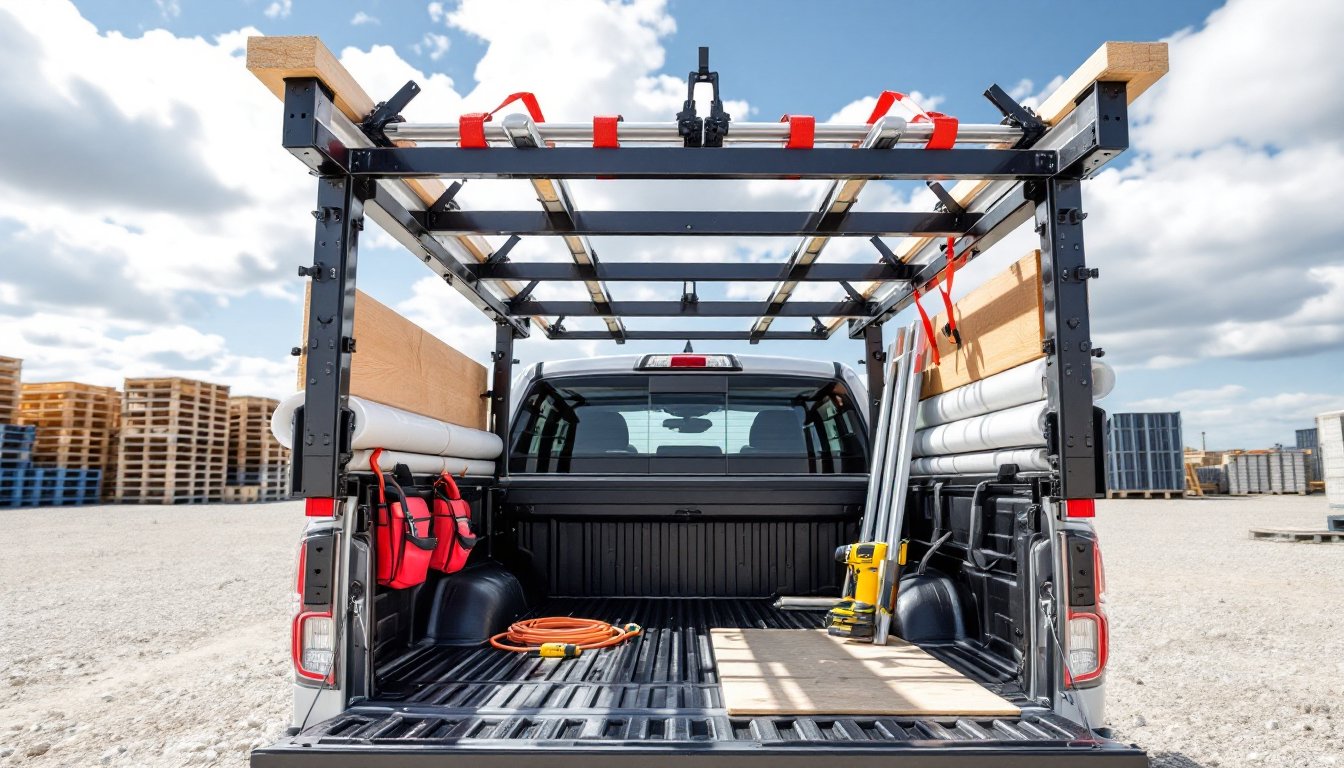

A disorganized truck bed is more than an eyesore, it’s a productivity killer. Tools sliding around, hardware spilling into corners, and gear getting buried under tarps wastes time on every job. A well-designed truck bed storage rack changes that. It puts everything within reach, protects cargo from weather and theft, and frees up floor space for materials. Whether hauling plywood to a job site or loading up camping gear for the weekend, the right storage rack turns a chaotic bed into a purpose-built workspace that handles whatever the workday or weekend throws at it.
Key Takeaways
- A truck bed storage rack transforms disorganized beds into secure, productive workspaces by securing cargo, protecting tools from weather, and freeing up floor space for additional materials.
- Safety, organization, and weather protection are the primary benefits of a truck bed storage rack, with overhead systems handling 500–1,500 pounds depending on material (aluminum vs. steel), while side-mounted rail systems excel at accessibility for frequently used items.
- Choosing the right truck bed storage rack requires matching bed dimensions, confirming payload capacity, and selecting materials based on corrosion resistance needs—aluminum for coastal areas, steel for budget-conscious buyers, and stainless steel for maximum durability.
- Proper installation with a torque wrench, level crossbars, and test loading before job site use ensures safety and prevents fastener loosening, while intentional organization by use frequency and proper securing with ratchet straps maximizes the rack’s value.
- Maintenance every few months, including bolt inspection, rust touch-ups, and lubrication of moving parts, extends the lifespan of your truck bed storage rack system and keeps gear theft-proof with locking toolboxes or tonneau covers.
Why Every Truck Owner Needs a Bed Storage Rack
Most truck owners treat the bed like a giant toolbox, everything tossed in, nothing secured. That approach works until something expensive slides into the wheel well or a stack of 2x4s shifts on the highway. A bed storage rack solves that by creating dedicated zones for tools, equipment, and materials.
Safety is the first benefit. Loose cargo becomes a projectile in a sudden stop or accident. Securing items overhead or along the rails keeps them locked in place, reducing the risk of injury or damage. Many racks also include tie-down points rated for specific weight capacities, giving users a reliable anchor for ratchet straps and bungee cords.
Organization follows closely. Instead of digging through a pile of gear, users can store frequently used items, like extension cords, hand tools, and safety equipment, in accessible bins or pouches mounted to the rack. This setup cuts job site prep time and keeps essential items from disappearing into the clutter.
Weather protection matters, too. Overhead racks with crossbars support tarps or tonneau covers, shielding tools from rain and UV damage. Some rack systems integrate directly with truck bed covers and accessories to create a fully enclosed storage area. For contractors working in variable climates, that protection extends the lifespan of expensive equipment and prevents rust on metal tools.
Finally, a storage rack increases payload capacity by utilizing vertical space. Instead of stacking materials flat and losing access to smaller items, users can store long pieces, like ladders, conduit, or lumber, overhead while keeping the bed floor clear for sheets of plywood, bags of concrete, or other bulk materials.
Types of Truck Bed Storage Racks to Consider
Not all truck bed racks serve the same purpose. Choosing the right type depends on cargo type, weight requirements, and how often the truck transitions between work and personal use.
Overhead Rack Systems
Overhead racks span the width of the truck bed and mount to the bed rails or stake pockets. They’re the go-to choice for carrying long materials like 10-foot lengths of PVC pipe, ladders, or kayaks. Most systems feature adjustable crossbars spaced 12 to 18 inches apart, allowing users to configure the layout based on cargo width.
Weight capacity varies widely. Entry-level aluminum racks handle 500 to 800 pounds of evenly distributed weight, suitable for extension ladders and light lumber. Heavy-duty steel racks support 1,200 to 1,500 pounds, making them viable for contractors hauling steel studs or multiple sheets of plywood. Always check the manufacturer’s static load rating (weight when parked) versus the dynamic load rating (weight while driving), the latter is typically lower.
Most overhead racks include removable crossbars for flexibility. On a weekend trip, pull the bars to drop the profile and improve aerodynamics. For job sites, reinstall them in minutes using quick-release pins or bolts. Some models integrate with toolboxes or cab guards, creating a unified storage system that maximizes vertical space without blocking the rear window.
Side-Mounted Rail Systems
Side-mounted rails attach directly to the truck bed’s inner walls or stake pockets, running the length of the bed. These systems prioritize accessibility over raw capacity. They’re ideal for carrying tools, hand equipment, and smaller cargo that needs frequent access throughout the day.
Rail systems use modular accessories, bins, pouches, and brackets, that slide or lock into place along the rails. A typical setup might include a socket organizer near the tailgate, a drill holster mid-bed, and a tie-down cleat at the front. This modularity lets users reconfigure storage as projects change without drilling new holes or permanently altering the bed.
Load capacity for rail systems is lower than overhead racks, typically 200 to 400 pounds total across both rails. They’re not designed for heavy materials, but they excel at keeping small items organized and preventing them from rattling around. Many systems also feature integrated tool storage solutions inspired by workshop setups, bringing that same organization to mobile work environments.
One key advantage: side rails maintain full bed floor access. There’s no overhead structure blocking a forklift or crane from loading materials, and the bed remains compatible with most tonneau covers and camper shells.
How to Choose the Right Storage Rack for Your Truck
Matching a rack to the truck and workload prevents buyer’s remorse and ensures the system performs as expected. Start by confirming the truck bed’s dimensions and weight capacity.
Bed length matters. A 6.5-foot bed accommodates most standard racks, but a 5.5-foot bed (common on crew cabs) may require shorter crossbars or compact rail systems. Measure from the inside of the bed, not the tailgate-to-cab exterior length. Also note whether the truck has stake pockets, those rectangular openings along the bed rail. Many racks use these for mounting without drilling, preserving the bed’s resale value.
Next, evaluate payload capacity. The truck’s door jamb sticker lists the maximum payload, which includes passengers, cargo, and any added accessories. A heavy steel rack might weigh 150 to 200 pounds before loading gear, cutting into available capacity. If the truck regularly hauls near its limit, an aluminum rack saves weight without sacrificing much durability.
Material choice boils down to budget and corrosion resistance. Aluminum racks resist rust naturally, making them suitable for coastal areas or regions with heavy road salt use. Steel racks offer higher strength-to-cost ratios but require powder coating or regular maintenance to prevent oxidation. Stainless steel splits the difference, corrosion-resistant and strong, but pricier.
Consider installation complexity. Some racks clamp directly to the bed rails using adjustable brackets, requiring only hand tools and 30 minutes. Others demand drilling through the bed or bolting into the frame, which increases stability but complicates removal. If the truck pulls double duty, work truck during the week, family hauler on weekends, prioritize systems with tool-free removal or quick-disconnect hardware.
Finally, think about accessory compatibility. A rack that integrates with existing toolboxes, bed extenders, or cab guards creates a cohesive system. Check whether the manufacturer offers add-ons like cargo nets, light mounts, or ratchet tie-down anchors. Buying into a modular ecosystem costs more upfront but provides flexibility as needs evolve.
DIY Installation Tips for Truck Bed Storage Racks
Installing a truck bed rack is straightforward if approached methodically. Most kits include hardware, but not all include the tools or prep materials needed for a solid installation.
1. Prep the bed. Remove all cargo and clean the bed rails thoroughly. Dirt or rust under mounting brackets causes instability. If drilling into the bed, mark hole locations with a center punch to prevent the drill bit from wandering. Use a deburring tool to smooth any sharp edges after drilling, this prevents future rust and protects hands during loading.
2. Confirm fitment. Lay out all components and dry-fit the rack before tightening anything. Some racks require slight adjustments to align with stake pockets or bed rail contours. If the kit includes rubber or plastic spacers, use them, they prevent metal-on-metal contact that can wear through paint and cause corrosion.
3. Torque fasteners properly. Over-tightening bolts can crack mounting brackets or strip threads, especially on aluminum racks. Under-tightening allows the rack to shift under load. Use a torque wrench and follow the manufacturer’s specs, typically 15 to 25 ft-lbs for bed rail clamps. For systems that bolt through the bed, apply thread-locking compound to prevent vibration from loosening fasteners over time.
4. Install crossbars level. Use a 4-foot level to ensure crossbars sit parallel to the ground. An angled bar concentrates weight unevenly, stressing mounting points and increasing the risk of failure. If the truck bed isn’t perfectly level (common on older trucks or those with aftermarket suspensions), shim the low side with washers or adjustable brackets.
5. Test the load capacity. Before heading to a job site, load the rack incrementally and check for flex or movement. Start with half the rated capacity and inspect all fasteners. If anything shifts, re-torque the hardware. Pay attention to how the truck handles, excessive weight high in the bed raises the center of gravity and affects braking distance.
Safety note: Wear gloves and safety glasses throughout the install. Metal racks have sharp edges, and drilling can throw metal shavings. If working alone, use a floor jack or sawhorses to support the rack during positioning, racks are awkward and heavy, making them difficult to hold steady while fastening.
Maximizing Your Truck Bed Storage Space
A storage rack only delivers value if it’s organized intentionally. Random placement leads to the same clutter problem, just elevated.
Zone by use frequency. Store everyday items, tape measures, marking pencils, utility knives, near the tailgate for quick access. Less frequently used gear, like specialty tools or seasonal equipment, goes forward near the cab. This setup minimizes time spent digging through cargo mid-job.
Use bins and pouches. Loose hardware and small tools disappear quickly. Attach weather-resistant bins to side rails or hang tool pouches from crossbars. Label each container clearly so crew members or family members can find items without help. For contractors working with teams, this reduces downtime and prevents duplicate tool purchases.
Secure everything. Even with a rack, cargo needs restraint. Use ratchet straps rated for the load, not cheap bungee cords that stretch and fail. Anchor straps to the rack’s integrated tie-down points or to bed-mounted D-rings. For smaller items, cargo nets work well, but ensure they’re cinched tight, loose nets allow items to bounce and shift.
Leverage vertical space. Stack lighter items overhead and heavier materials on the bed floor. This keeps the center of gravity low, improving handling and reducing strain on the rack. If carrying long materials like 12-foot dimensional lumber, use a bed extender in combination with the rack to support the overhang safely and legally. Many states require red flags on loads extending more than 4 feet past the tailgate.
Protect against theft. Truck bed racks make gear visible, increasing theft risk. Use locking toolboxes or install a tonneau cover that locks over the rack. For high-value tools, consider security strategies used in workshop environments, cable locks through tool handles, engraved identification, or GPS trackers hidden in cases.
Maintain the system. Inspect mounting hardware every few months, especially after heavy use or long highway trips. Vibration loosens bolts over time. Check for rust on steel components and touch up powder coating with rust-inhibiting spray paint if needed. Lubricate moving parts, like sliding brackets or hinges, with dry graphite lubricant to prevent seizing.
A well-maintained truck bed storage rack turns a general-purpose vehicle into a job-specific machine. It reduces wasted motion, protects investment in tools and materials, and ensures everything arrives at the site ready to work, not tangled, damaged, or lost in the shuffle.