

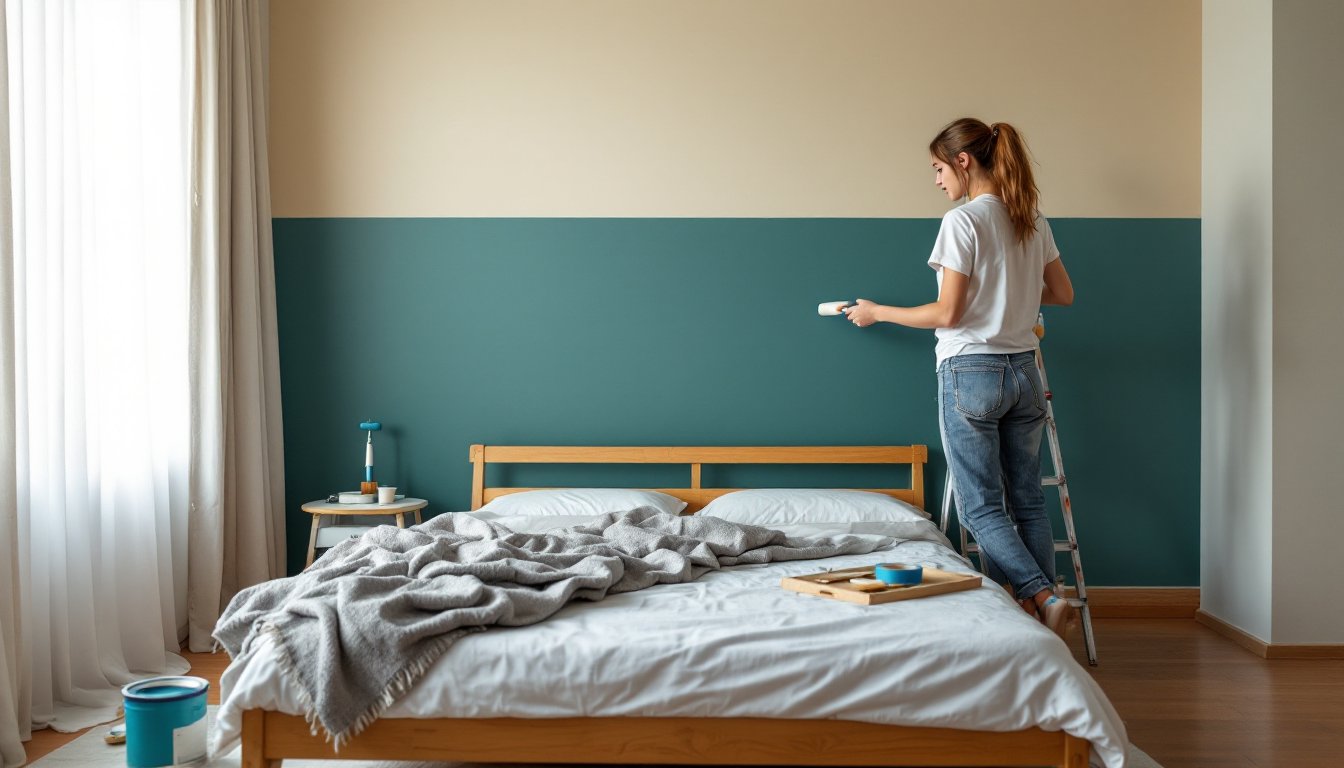

A fresh coat of paint can completely change how a bedroom feels, and it’s one of the most cost-effective updates you can tackle in a weekend. Unlike renovations that require permits or professional installers, painting is accessible to most DIYers with basic tools and a little patience. Whether you’re looking to create a calming retreat or a bold statement wall, the right paint technique and color choice make all the difference. This guide covers practical wall painting ideas for bedroom spaces, from accent walls and geometric patterns to soothing palettes and gradient effects that add visual interest without the need for expensive finishes.
Key Takeaways
- Wall painting ideas for bedroom spaces offer maximum impact with minimal cost, typically requiring just $60–$120 in materials and a single weekend of DIY work.
- Proper prep work—including wall washing, spackle filling, and primer application—is essential to prevent uneven coverage and peeling, making it the most critical step before painting.
- Accent walls, color blocking, and geometric patterns create visual interest and dimension, with proper painter’s tape and removal timing (while paint is slightly tacky) preventing bleed-through and damage.
- Cool tones like blues and greens promote relaxation and better sleep, while high-chroma colors should be reserved for accent walls to avoid overstimulation in your bedroom.
- Creative painting techniques such as ombre gradients, stenciling, and textured finishes add sophistication without professional skill or expensive equipment.
- Eggshell or satin paint finishes are ideal for bedrooms as they’re washable and hide imperfections better than flat finishes, while low-VOC paints reduce odor and health concerns.
Why Wall Paint Is the Easiest Way to Refresh Your Bedroom
Paint delivers maximum impact for minimal investment. A gallon of quality interior paint covers roughly 350–400 square feet and typically costs $30–$60, depending on the brand and finish. For an average 12×12-foot bedroom with 8-foot ceilings, you’re looking at about two gallons to cover all four walls with two coats.
Unlike installing new flooring or replacing furniture, painting doesn’t require specialized skills or expensive tools. A roller frame, extension pole, angled brush, painter’s tape, and drop cloths are the essentials, and most homeowners already own or can borrow these items. The project is also reversible, if you don’t like the color, you can repaint without tearing anything out.
Prep work matters more than most people realize. Wash walls with a mild detergent solution to remove dust and oils, fill nail holes with spackle, and sand any rough patches with 120-grit sandpaper. Skipping this step leads to uneven coverage and peeling down the line. Prime any patched areas or dark colors you’re covering: a stain-blocking primer ensures the old color doesn’t bleed through.
One often-overlooked benefit: painting is a non-structural project that doesn’t require permits in most jurisdictions. You can start Friday night and sleep in a transformed room by Sunday.
Accent Wall Ideas That Make a Statement
An accent wall draws the eye and adds dimension without overwhelming the space. The most common approach is painting the wall behind the bed, but side walls or the wall opposite the door can work just as well depending on your room’s layout.
Bold Color Blocking and Geometric Patterns
Color blocking involves painting distinct sections of a wall in contrasting or complementary colors. Sharp, clean lines are key here, invest in quality painter’s tape (look for brands labeled “sharp lines” or “14-day clean removal”) and press the edges down firmly with a putty knife to prevent bleed-through.
For vertical or horizontal blocks, measure and mark your design with a level and pencil before taping. A two-tone horizontal split at chair rail height (typically 32–36 inches from the floor) creates a classic look, while vertical blocks can make low ceilings feel taller. Many DIYers replicate room makeover techniques that use two or three colors in geometric arrangements.
Geometric patterns, triangles, hexagons, chevrons, require more planning but deliver serious visual impact. Use a laser level if you have one: it saves time and frustration compared to a bubble level. Painters often work from lightest to darkest color to minimize the number of coats needed. Remove tape while the top coat is still slightly tacky (about 30–60 minutes after application) to avoid pulling up dried paint.
Textured Accent Walls for Added Depth
Texture adds a tactile element that flat paint can’t match. Venetian plaster, applied with a trowel in thin layers, creates an old-world, dimensional finish. It’s more labor-intensive than rolling paint, but the depth it adds is striking in low light.
Another option: suede or sand-finish paints, which contain fine particles that scatter light and hide minor wall imperfections. These are applied with a special roller or trowel and work well in bedrooms where you want a softer, less reflective surface than satin or semi-gloss.
For a DIY-friendly textured look, try a stippling or sponging technique. Pour your accent color into a paint tray, dip a natural sea sponge (not a synthetic one, they leave harsh, repetitive marks), and dab it onto a base-coated wall in random, overlapping motions. This method is forgiving and adds subtle variation that mimics high-end wallpaper.
Soothing Color Palettes for Restful Sleep
Color psychology isn’t pseudoscience when it comes to sleep environments. Cool tones, blues, greens, and soft grays, tend to lower heart rate and promote relaxation, making them ideal for bedrooms. Warm neutrals like beige, greige (gray-beige blends), and soft whites also work well, especially in rooms with limited natural light.
Avoid high-chroma colors (bright reds, oranges, or intense yellows) on all four walls: they’re stimulating and can interfere with winding down at night. If you love bold color, save it for an accent wall or pair it with neutral surroundings.
Light Reflectance Value (LRV) is worth understanding. It’s a 0–100 scale that measures how much light a color reflects. Dark colors have low LRV (under 20), while whites and pastels score above 70. In small bedrooms or those with north-facing windows, higher LRV colors prevent the space from feeling cave-like.
Test paint samples on your actual walls before committing. Paint a 2×2-foot square and observe it at different times of day, morning light, afternoon sun, and evening lamplight all shift how a color reads. Many budget makeover projects emphasize this step because it prevents costly repaints.
Finish matters too. Eggshell or satin finishes are the go-to for bedrooms. They’re washable (important if you have kids or pets), but they don’t reflect as much light as semi-gloss, which can feel too shiny and highlight wall flaws. Flat or matte finishes look elegant but are harder to clean and show scuffs easily.
Creative Painting Techniques to Try
Once you’ve mastered basic rolling and cutting in, these techniques add visual interest without requiring professional skills.
Ombre and Gradient Effects
An ombre wall transitions from one color at the top to another at the bottom, usually from dark to light or vice versa. The effect is softer and more organic than hard color blocking.
Start by painting the entire wall in your lightest color and letting it dry completely. Divide the wall into three or four horizontal sections with light pencil marks. Mix your darkest color at the bottom section, then blend upward by adding more of the lighter color to your paint as you move up each section. Work with a dry brush or blending sponge while the paint is still wet, feathering the edges where each section meets.
This technique takes practice, expect to do a test run on poster board or a hidden wall first. A paint extender or glaze medium keeps the paint workable longer, giving you time to blend before it dries. Many DIY painting tutorials walk through blending step-by-step with photos.
Gradients work horizontally too. A subtle shift from a saturated blue on one wall to a pale blue on the opposite wall creates flow and makes a small room feel larger. Use at least three transition shades for a smooth effect.
Other creative techniques worth exploring:
- Stenciling: Use a repositionable stencil and a foam pouncer or stencil brush (not a roller, which causes bleed). Moroccan, damask, or geometric stencils add pattern without the cost or commitment of wallpaper.
- Stripes: Vertical stripes make ceilings feel higher: horizontal ones widen a narrow room. Use a laser level and painter’s tape, and always paint your base color first, then apply tape and add the stripe color on top.
- Murals or hand-painted designs: If you’re artistically inclined, a simple mountain silhouette, abstract shapes, or even a painted headboard directly on the wall adds one-of-a-kind character. Use a projector to trace complex designs onto the wall before painting.
Safety note: Always ventilate the room well. Open windows, use a box fan to direct fumes outside, and wear a respirator mask rated for organic vapors (not just a dust mask) if you’re sensitive to VOCs. Low-VOC and zero-VOC paints are widely available now and significantly reduce odor and off-gassing, making them a better choice for bedrooms.