

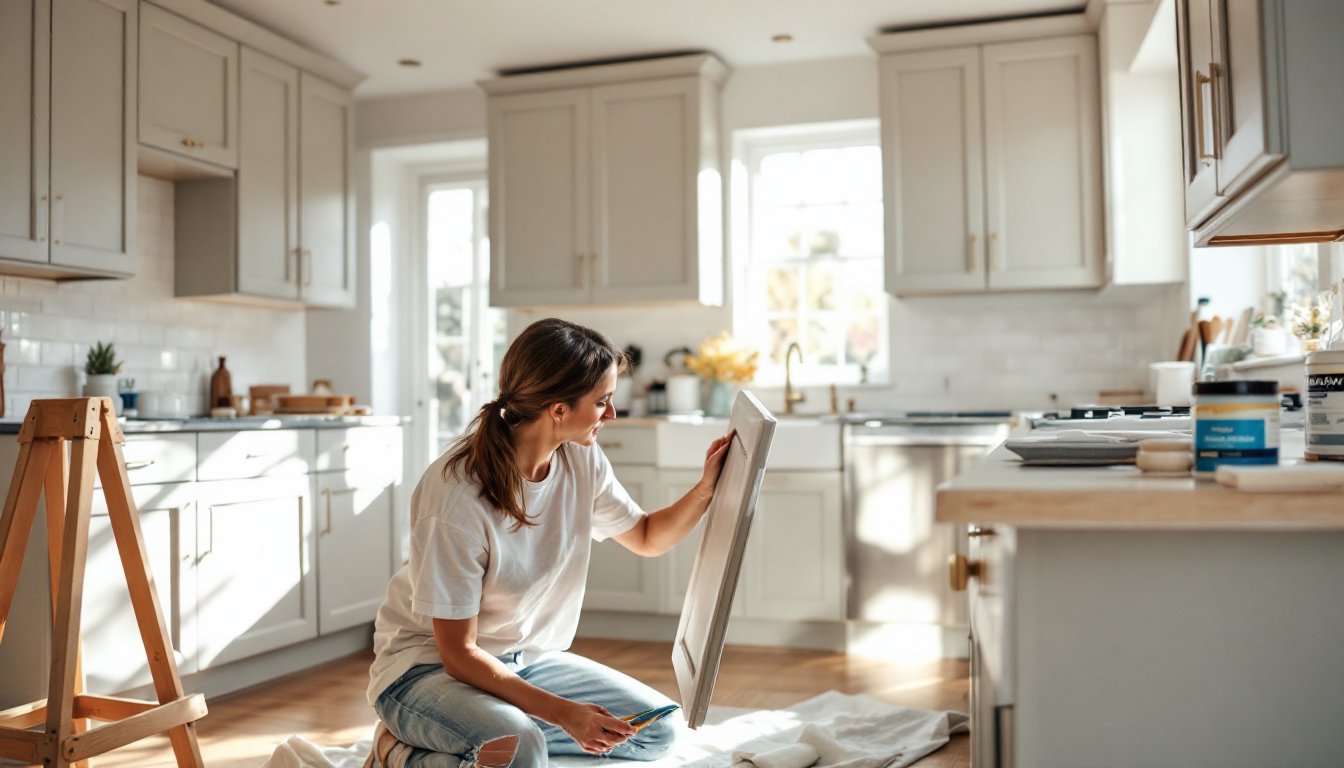

Painting kitchen cabinets can save thousands compared to a full replacement, but it’s not the right move for every kitchen. Homeowners often jump into the project expecting a simple weekend refresh, only to discover the reality involves tedious prep work, multiple coats, and week-long drying times. The difference between a professional-looking finish and a sticky, chipped mess comes down to honest assessment of the cabinets’ condition, realistic expectations about time and skill, and understanding when fresh paint is a smart investment versus a Band-Aid on a structural problem.
Key Takeaways
- Painting kitchen cabinets costs $3,000–$8,000 professionally or $200–$500 for DIY materials, saving thousands compared to replacement projects starting at $10,000+.
- Solid wood and MDF cabinets are ideal candidates for painting, but laminate, thermofoil, and water-damaged cabinets should be replaced instead.
- Expect a full week minimum for DIY cabinet painting, with the majority of time spent on prep work like degreasing, sanding, and priming rather than painting itself.
- Quality cabinet paints like Benjamin Moore Advance or Sherwin-Williams Urethane can last 8–12 years with proper surface prep and maintenance, while lower-quality paints may fail within 2–3 years.
- Fresh paint on cabinets modernizes outdated finishes, increases home resale value, and allows creative flexibility like two-tone or accent colors without the disruption of full kitchen renovation.
The Real Benefits of Painting Your Kitchen Cabinets
The most compelling reason to paint cabinets is cost. A professional cabinet painting job typically runs $3,000 to $8,000 depending on kitchen size and finish complexity, while cabinet replacement starts around $10,000 and climbs quickly past $25,000 for custom work. DIY painting cuts that professional quote in half or more, materials for an average kitchen run $200 to $500 for quality primer, paint, hardware, and supplies.
Beyond the budget argument, painting allows homeowners to update outdated finishes without the disruption of a full renovation. Oak cabinets with honey-colored stain dominated kitchens in the 1990s and 2000s: a coat of greige or navy paint instantly modernizes the space. The cabinet boxes, drawer slides, and hinges remain intact, so there’s no need to empty the kitchen for weeks or reconfigure layouts.
Paint also offers creative flexibility. Homeowners can achieve two-tone looks (darker lowers, lighter uppers), accent island cabinets, or test bold colors without committing to expensive custom cabinetry. High-quality cabinet paints like Benjamin Moore Advance or Sherwin-Williams Emerald Urethane cure to a hard, furniture-grade finish that resists moisture and daily wear better than standard wall paint.
Finally, well-executed cabinet painting increases home resale value. Kitchens drive buyer decisions, and fresh, modern cabinets photograph well and signal that the home is updated and maintained. The return isn’t dollar-for-dollar, but it’s significantly better than leaving dated or dingy cabinets as-is.
When Painting Cabinets Makes Sense (And When It Doesn’t)
Not every cabinet is a good candidate for paint. Understanding the difference saves time, money, and frustration.
Best Candidates for Cabinet Painting
Solid wood cabinets in good structural condition top the list. Face-frame construction with hardwood doors (maple, oak, cherry, birch) accepts paint beautifully and has the longevity to justify the effort. Check that doors hang square, drawers glide smoothly, and hinges function properly. Minor dings and scratches are fine, they fill and sand easily, but the underlying structure should be sound.
Medium-density fiberboard (MDF) cabinets also paint well. MDF is stable, doesn’t have wood grain to telegraph through paint, and takes primer evenly. Many modern flat-panel and shaker-style cabinet doors use MDF, and it’s an ideal substrate for a smooth, painted finish.
Outdated but functional layouts benefit most. If the kitchen’s footprint works and storage meets the household’s needs, painting refreshes the look without the expense and disruption of reconfiguration. Pair fresh paint with new hardware and updated lighting for a cohesive transformation.
Homeowners comfortable with detail-oriented prep work should consider DIY. Success hinges on thorough degreasing, sanding, priming, and patience between coats. Those who enjoy methodical projects and have a workspace for drying doors (garage, basement) often achieve results comparable to professional work by following proven techniques found in detailed painting tutorials.
When You Should Consider Replacement Instead
Laminate or thermofoil cabinets present challenges. Laminate is a thin plastic layer bonded to particleboard: it can peel, and paint adhesion is inconsistent even with specialized bonding primers. Thermofoil (a vinyl film heat-sealed to MDF) bubbles and peels near heat sources and doesn’t hold paint reliably. While specialty primers claim success, many homeowners find the finish fails within a year or two.
Water-damaged or delaminating cabinets aren’t salvageable with paint. Look for swollen particleboard near sinks, cracked joints, or doors that won’t close flush. Paint can’t restore structural integrity, and applying a fresh finish to failing cabinets wastes effort.
Poor layouts or insufficient storage warrant replacement. If the kitchen lacks drawer space, has awkward corner cabinets, or doesn’t accommodate modern appliances, paint only delays the inevitable remodel. Invest in reconfiguration instead.
Finally, if the cabinet boxes, shelves, or drawer boxes are heavily worn, edges chipped, shelf pin holes stripped, drawer bottoms sagging, painting the doors creates visual inconsistency. The interiors still look tired, and the mismatch undermines the refresh.
What to Expect: Cost, Time, and Effort Involved
Realistic expectations prevent frustration. Cabinet painting is a multi-day commitment, not a weekend project.
Time investment for DIY breaks down roughly as follows: 2-3 days for removal, labeling, cleaning, and sanding: 1 day for priming: 1-2 days for the first paint coat: 1-2 days for the second coat: and 1 day for reassembly and hardware installation. Factor in drying and curing times, alkyd (oil-based) paints require 16-24 hours between coats, while waterborne enamels dry faster but benefit from light sanding between applications. Plan for a full week minimum, longer if working around family schedules or limited workspace.
Materials for a standard 10×10 kitchen include:
- Deglosser or TSP cleaner: $10-15
- Bonding primer (1 gallon): $40-50
- Cabinet paint (2 gallons for two coats): $100-160
- Sandpaper and sanding sponges (120, 220 grit): $15-20
- Tack cloths, foam rollers, angled brushes: $20-30
- Painter’s tape, drop cloths: $15-20
- New hardware (optional but recommended): $50-200
Total material cost: $250-500 depending on paint quality and hardware choices.
Professional quotes vary by region and kitchen size. Expect $50-$100 per door/drawer face for quality work, which includes removal, shop spraying, and reinstallation. Larger kitchens or intricate details (glazing, distressing) push costs higher. Get at least three quotes and ask for references with photos of completed work.
Tool requirements include:
- Random orbital sander or sanding block
- Foam rollers (4-inch for doors, 6-inch for large panels)
- 2-inch angled brush for edges and details
- Screwdriver or drill for hardware removal
- Paint sprayer (optional but produces the smoothest finish: HVLP or airless models run $100-400)
A respirator mask (not a dust mask) is essential when sanding primer or using alkyd paints in enclosed spaces. Safety glasses prevent primer and paint splatter injuries, and nitrile gloves protect hands from solvents and paint.
Many popular home renovation resources, including comprehensive guides on budget home renovation stories, emphasize the importance of allocating more time for prep than painting. Skipping deglosser or light sanding between coats is the most common shortcut that leads to failure.
How Long Does Painted Cabinet Finish Actually Last?
Durability depends on three factors: surface prep, paint quality, and household use.
Properly prepped and painted cabinets using waterborne alkyd or urethane-fortified paints can last 8-12 years or more before needing a refresh. These paints cure to a hard, cross-linked finish that resists moisture, grease, and handling. Lower-quality latex paints or those applied without adequate primer may show wear, edge chipping, yellowing, or stickiness, within 2-3 years.
Oil-based (alkyd) paints offer superior durability and self-leveling properties, which minimize brush marks. But, they require mineral spirits cleanup, emit strong fumes during application, and yellow over time, especially in low-light areas. Regulations in some jurisdictions limit VOC content, restricting oil-based options.
Waterborne enamels like Benjamin Moore Advance combine easier cleanup and lower odor with performance approaching traditional oil paints. They dry quickly but require careful technique to avoid visible brush or roller marks. Multiple thin coats outperform one thick application.
High-traffic households, families with young children, frequent cooking, or pets, see faster wear. Edges near handles, lower cabinet doors, and areas near the stove accumulate grease and contact damage first. Routine cleaning with mild soap (never abrasive cleaners or scouring pads) extends finish life.
Curing time is critical. While paint may feel dry to the touch in hours, full cure takes 2-4 weeks. During this period, avoid stacking items against doors, closing them forcefully, or using harsh cleaners. Premature heavy use can mar the finish or cause paint to stick to adjacent surfaces.
Touch-ups are inevitable. Keep leftover paint for spot repairs, and feather edges carefully to blend. If cabinets were sealed with a topcoat (polyurethane or polycrylic), touch-ups may require light sanding and reapplication of the topcoat for a seamless repair.
Professional finishes often outlast DIY work because spray application produces thinner, more uniform coats and commercial-grade catalyzed lacquers cure harder than consumer paints. But, conscientious DIYers who follow proper prep and application steps routinely achieve finishes lasting a decade or more. Those seeking additional ideas for refreshing kitchen design often find that updated hardware, lighting, and backsplash amplify the impact of freshly painted cabinets.
Conclusion
Painting kitchen cabinets is a smart investment when the boxes are structurally sound, the layout functions well, and the homeowner is prepared for the time and detail work involved. It’s not a shortcut for failing cabinets or poor kitchen design, and rushing the process guarantees disappointing results. Done right, fresh paint delivers a high-impact kitchen update at a fraction of replacement cost.