

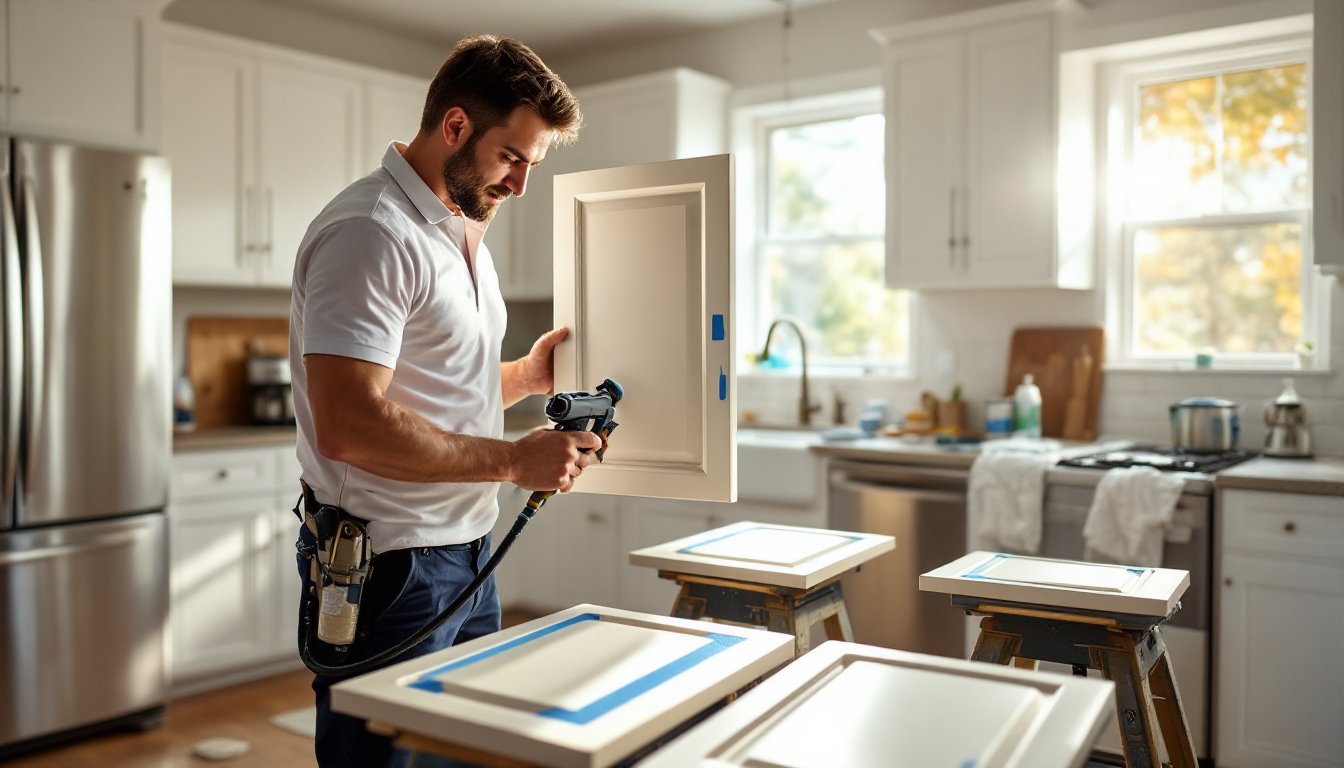

Searching for “paint kitchen cabinets near me” at 2 a.m. after staring at your worn-out cabinets? You’re not alone. Cabinet painting ranks among the most cost-effective kitchen upgrades, but finding the right pro in your area can feel overwhelming. Between online reviews, price quotes, and sorting legit contractors from weekend warriors, the process gets complicated fast. This guide cuts through the noise, walking you through how to locate, vet, and hire qualified local cabinet painters who’ll deliver a professional finish, without the guesswork or regret.
Key Takeaways
- Paint kitchen cabinets near me searches lead to cost-effective upgrades, with local contractors offering faster response times, climate expertise, and better accountability than out-of-area professionals.
- Find qualified cabinet painters through online directories (Google Business Profiles, Houzz, Angi, Thumbtack), local paint supply shops, neighborhood referrals, and designer recommendations to build a vetted shortlist.
- Evaluate contractors by asking about prep processes, paint products (prioritize Benjamin Moore Advance or Sherwin-Williams Emerald Urethane), application methods, cure times, insurance, and warranty coverage before hiring.
- Cabinet painting costs range from $3,000-$8,000 for average kitchens, with pricing based on linear footage ($75-$150/ft), door count, cabinet condition, and finish type—always request three itemized quotes to compare accurately.
- Hire a professional if your cabinets have laminate surfaces, existing damage, or tight timelines; DIY is viable only if you have painting experience, proper tools, workspace, and 30-50 hours to spare.
Why Hiring Local Cabinet Painters Makes Sense for Your Kitchen
Local cabinet painters bring distinct advantages that out-of-area contractors can’t match. Response time tops the list, when a painter operates within 20-30 miles of your home, they can schedule site visits faster, accommodate last-minute changes, and address any touch-ups without the logistics headache.
Cabinet painting isn’t a one-day job. Professional projects typically require 5-7 days of work: removal, cleaning, sanding, priming (often two coats), painting (usually two topcoats), curing time, and reinstallation. Local pros understand regional humidity and temperature patterns that affect dry times. A painter familiar with your area’s climate knows whether to add drying agents in August or plan extra cure time during a damp spring.
You’ll also get better accountability. Local businesses depend on community reputation. A cabinet painter with a physical shop or established presence in your town has skin in the game, they can’t ghost you after a bad job. Plus, if you need warranty work six months later (a loose hinge, a chipped edge), they’re accessible.
Finally, local painters often stock the right materials for your region’s conditions. Coastal areas need moisture-resistant primers: homes near highways might require more durable topcoats. A contractor who regularly works in your zip code already knows what products hold up.
How to Find Qualified Cabinet Painting Professionals in Your Area
Finding skilled cabinet painters requires more than a quick Google search. Here’s how to build a shortlist of reliable candidates.
Online Directories and Review Platforms
Start with dedicated home improvement platforms. Services like ImproveNet connect homeowners with vetted local contractors and provide cost estimates based on your zip code. These directories pre-screen for licensing and insurance, saving you that step.
Next, check Google Business Profiles. Look beyond star ratings, read the actual reviews. Pay attention to mentions of prep work quality, communication, and how the painter handled problems. A 4.7-star rating with 60+ reviews typically beats a perfect 5.0 with only three reviews (which might be friends and family).
Houzz offers another angle. The platform serves both pros and homeowners, and you can filter by design and construction specialists in your area who showcase finished kitchen projects. Browse photo galleries to see if their aesthetic matches yours, cabinet painting style varies (some pros excel at smooth modern finishes, others specialize in distressed or glazed looks).
Don’t skip Angi (formerly Angie’s List) or Thumbtack. Both let you request quotes from multiple painters at once. You’ll get a range of pricing and can compare each contractor’s response time and professionalism just from their initial contact.
Local Referrals and Community Recommendations
Word-of-mouth still carries weight. Post in neighborhood Facebook groups or Nextdoor asking for cabinet painter recommendations. Neighbors who’ve recently done the work will share honest opinions, and warn you about contractors to avoid.
Visit local paint supply stores (not big-box retailers, but the shops that sell Benjamin Moore, Sherwin-Williams, or Fine Paints of Europe). Counter staff know which contractors buy professional-grade products regularly. Ask, “Who do you see in here buying cabinet coatings?” That’ll point you toward serious pros, not side-hustlers using cheap latex.
Your kitchen designer or general contractor can also provide names. Even if you’re not doing a full remodel, a quick call to a local design firm might yield a referral. Designers work repeatedly with the same trusted painters and won’t risk their reputation on a referral that goes sideways.
Finally, check with your local building department. While cabinet painting doesn’t usually require permits, contractors who pull permits regularly for other jobs demonstrate they follow code and operate legitimately.
What to Ask Before Hiring a Cabinet Painter Near You
Once you’ve narrowed down candidates, schedule in-person estimates. A reputable painter will always inspect the cabinets before quoting. Walk-throughs let them assess wood type, existing finish, damage, and door style, all factors that affect prep and pricing.
Ask these questions during the estimate:
“What’s your prep process?” This matters more than the paint itself. Proper prep includes removing doors and hardware, cleaning with TSP (trisodium phosphate) or a degreaser, sanding (usually 150-220 grit), filling dings, and priming. If a painter says they’ll “just scuff and spray,” walk away.
“Which primer and paint will you use?” For cabinets, you want products designed for the abuse kitchens dish out. Top choices include Benjamin Moore Advance (waterborne alkyd), Sherwin-Williams Emerald Urethane Trim Enamel, or **Fine Paints of Europe Hollandlac Brilliant. Pros often use oil-based or hybrid primers like BIN shellac primer or STIX for adhesion on slick surfaces.
“Do you spray, roll, or brush?” HVLP (high-volume, low-pressure) spraying delivers the smoothest factory-like finish but requires careful masking. Rolling and brushing work but leave more texture. Ask to see photos of previous jobs using their chosen method.
“How long is the cure time?” Paint dries to the touch in hours, but full cure, when you can scrub and stack dishes, takes longer. Waterborne alkyds need 7-14 days to harden completely. A good painter will warn you to handle doors gently during this period.
“Are you insured and licensed?” Request proof of general liability insurance and a workers’ comp policy (if they have employees). Even if your state doesn’t require a painting license, verify they have a business license and tax ID.
“What does your warranty cover?” A solid warranty covers peeling, cracking, or adhesion failure for at least one year. It shouldn’t cover damage from homeowner misuse (slamming doors, harsh cleaners).
Don’t hire anyone who won’t provide references from the past six months. Call those references and ask specifically about cleanliness (cabinet painting creates dust and overspray), timeline accuracy, and final results.
Understanding Local Cabinet Painting Costs and Getting Accurate Quotes
Cabinet painting costs vary by region, kitchen size, and condition, but expect to pay $3,000-$8,000 for an average-sized kitchen (20-30 cabinet doors and drawer fronts). High-end finishes or extensive repairs can push that higher.
Pricing factors include:
- Linear footage: Pros often charge $75-$150 per linear foot of cabinetry.
- Door count: Some quote $50-$125 per door/drawer front.
- Cabinet condition: Grease buildup, water damage, or needing wood filler for gouges adds labor.
- Finish type: Solid colors are straightforward. Glazing, distressing, or two-tone designs cost more.
- Hardware: If you’re replacing hinges and pulls, that’s extra.
Get at least three written quotes. Each should itemize prep, materials (primer and paint brand/type), labor, and timeline. Avoid quotes that lump everything into one line, it’s harder to compare apples to apples.
Watch for red flags. A quote significantly lower than others might mean the painter is cutting corners (skipping primer, using one coat, not removing doors). A sky-high quote isn’t necessarily better, but it might include perks like upgraded hardware installation or a longer warranty.
Timing affects cost too. Painters may offer 10-15% discounts in slower months (January-March in many regions). But don’t choose based on price alone, a bad job costs more to fix than hiring the right pro upfront.
DIY vs. Professional Cabinet Painting: Making the Right Choice
Cabinet painting is a popular DIY project, and plenty of homeowners get great results. But it’s also unforgiving, mistakes are visible every time you open a drawer.
DIY makes sense if:
- You have experience with painting or finishing projects.
- Your cabinets are in good shape (minimal grease, no peeling veneer).
- You have the time (plan for 30-50 hours spread over a week or more).
- You own or can rent an HVLP sprayer (a brush/roller finish won’t match a pro spray job).
- You’ve got space to lay out doors for drying, a garage or spare room works.
For DIY, budget $200-$600 for quality primer, paint, sandpaper, TSP, brushes, masking supplies, and possibly a sprayer rental. You’ll save thousands in labor but invest significant sweat equity.
Hire a pro if:
- Your cabinets have laminate or thermofoil surfaces (these need specialty primers and careful technique).
- There’s existing damage, water stains, peeling veneer, deep scratches.
- You lack the tools or space for proper prep and spraying.
- Your timeline is tight (a pro crew finishes in a week: DIY often stretches into weekends for a month).
- You want a factory-smooth finish. Even skilled DIYers struggle to match the flawless surface a pro achieves with commercial spray equipment and years of experience.
As Bob Vila often emphasizes, cabinet painting sits in that tricky middle ground, not quite as simple as rolling a bedroom wall, but not as complex as a full kitchen remodel. If you’re confident in your skills and willing to invest the time, DIY can work. But if your cabinets are your kitchen’s focal point and you want results that last a decade, hiring a local pro is worth the investment.
A hybrid approach works too: hire a painter for the hard parts (spraying doors and drawer fronts) and tackle the simpler tasks yourself (removing hardware, painting interior shelves, reinstalling). Some local painters offer “partial service” at a reduced rate.