

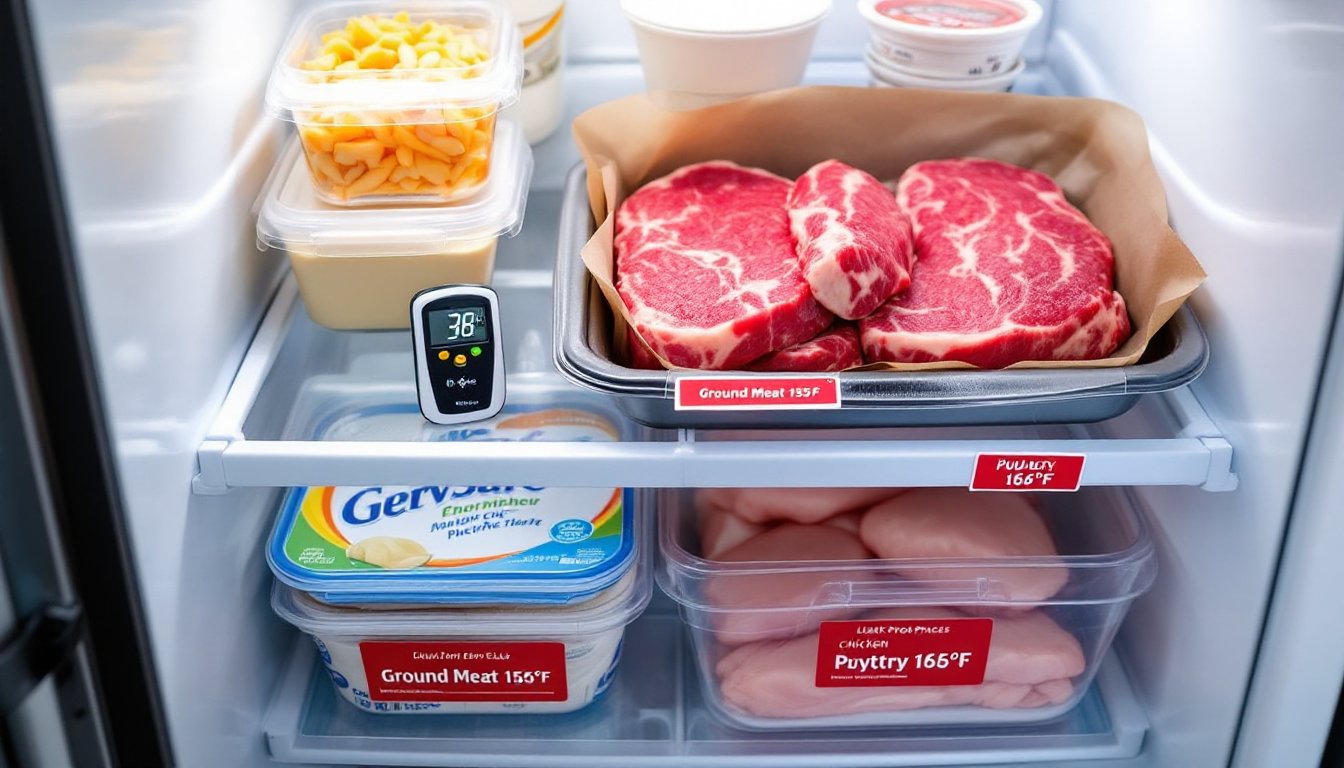

Most home kitchens treat refrigerator storage like a game of Tetris, food goes wherever it fits. But ServSafe, the food safety certification program trusted by the commercial food industry, follows a strict vertical storage system designed to prevent cross-contamination and foodborne illness. The same principles that keep restaurant kitchens safe can drastically reduce the risk of pathogens like Salmonella and E. coli spreading through a home fridge. Understanding where specific foods belong, and why, turns a cold box into a properly organized safety zone. This guide breaks down the ServSafe refrigerator storage chart by shelf, explains the temperature science behind it, and shows how to carry out these professional-grade practices in any home kitchen.
Key Takeaways
- The ServSafe refrigerator storage chart requires organizing foods by descending cooking temperature, with ready-to-eat items on top and raw proteins (poultry, fish, ground meat) on the bottom to prevent cross-contamination and foodborne illness.
- Maintain your refrigerator at 41°F or below to slow bacterial growth and prevent foods from entering the danger zone between 41°F and 135°F, which dramatically increases pathogen multiplication.
- Store raw meats in leak-proof containers on the bottom shelf only, never above ready-to-eat foods like leftovers, deli meats, or salads, and use rimmed trays to catch any drips that could contaminate other items.
- Label each shelf and invest in clear, stackable storage containers with tight-fitting lids to maintain organization, track expiration dates, and ensure everyone in the household follows proper storage guidelines.
- Date all leftovers and consume them within three to four days; transfer anything that won’t be eaten in time to the freezer to reduce food waste and maintain food safety.
Understanding the ServSafe Storage Guidelines
The ServSafe refrigerator storage system is built on one core principle: store foods in descending order of minimum internal cooking temperature, from top to bottom. Raw foods that require higher cooking temperatures (like poultry at 165°F) go on the lowest shelf, while ready-to-eat items that won’t be cooked further stay at the top.
This vertical arrangement prevents drips from raw meat, poultry, or seafood from contaminating foods below. Even a small amount of raw chicken juice dripping onto lettuce or cooked leftovers can transfer dangerous bacteria. Gravity works against cross-contamination when the storage order matches cooking temps.
ServSafe guidelines also mandate that all foods be stored in covered containers or tightly wrapped to prevent exposure. Clear, labeled containers make it easy to track contents and dates. Storing food at least six inches off the floor (standard commercial practice) isn’t always feasible in home units, but the vertical order remains non-negotiable.
The chart isn’t just for restaurants. Home cooks who follow ServSafe principles report fewer instances of spoilage and food waste. When everyone in the household knows that raw ground beef belongs on the bottom shelf, never next to the milk, cross-contamination risks drop significantly. Many home organization experts emphasize shelf placement as a critical step in maintaining a safe, efficient kitchen.
The Complete Refrigerator Storage Chart by Shelf
Top Shelf Storage
The top shelf is reserved for ready-to-eat foods that won’t be cooked before consumption. This includes:
- Leftovers (cooked meats, casseroles, soups) in sealed containers
- Deli meats and cheeses (pre-sliced or opened packages)
- Prepared salads (potato salad, coleslaw, pasta salad)
- Ready-to-eat desserts and dairy products like yogurt or sour cream
- Drinks (milk, juice, beverages)
These items should be stored in the coldest part of the top shelf, typically toward the back. The front of the top shelf tends to experience slight temperature fluctuations when the door opens. Use airtight containers to prevent odors from transferring between foods.
Date all leftovers with masking tape and a marker. ServSafe recommends consuming refrigerated leftovers within three to four days. If something won’t be eaten within that window, freeze it instead.
Middle Shelves Storage
The middle shelves follow the descending temperature rule. Store foods here in this order, from top to bottom:
- Whole cuts of beef and pork (roasts, steaks, chops) on the upper middle shelf. Minimum safe cooking temp: 145°F with a three-minute rest.
- Ground meats and ground fish on the lower middle shelf. Minimum cooking temp: 155°F. Ground products have more surface area exposed to bacteria during processing, so they require higher heat.
- Whole or ground poultry (if not stored on the bottom shelf). Minimum cooking temp: 165°F.
All raw meats should sit in rimmed trays or containers to catch any drips. A half-sheet pan (13″ x 18″) lined with paper towels works well for this purpose. Never store raw meat directly on a wire shelf where juices can leak through.
Eggs can also go on middle shelves, preferably in their original carton rather than the door. The carton protects them from absorbing refrigerator odors and prevents temperature swings.
Bottom Shelf Storage
The bottom shelf is the coldest zone in most refrigerators and the mandatory location for the highest-risk raw proteins:
- Raw poultry (whole chickens, turkey, chicken breasts, thighs)
- Ground poultry (ground turkey, ground chicken)
- Raw fish and shellfish (if not consumed within 24 hours, fish should be stored on ice in a perforated pan)
These proteins require cooking to at least 165°F to eliminate pathogens. Storing them on the bottom shelf ensures that any leaks or drips can’t contaminate other foods. Use deep, leak-proof containers or heavy-duty zip-top bags placed inside a tray.
Some kitchen organization strategies suggest dedicating a specific bin or drawer to raw meats, making it easier to maintain separation. If the fridge has a meat drawer or climate-controlled compartment, use it exclusively for raw proteins and clean it thoroughly between uses.
Never place produce on the bottom shelf unless it’s in a sealed crisper drawer. The crisper drawers at the very bottom are designed for fruits and vegetables, but they should remain separate from raw meat storage areas.
Proper Temperature Control and Monitoring
The ServSafe standard for refrigerator temperature is 41°F or below. At this temperature, bacterial growth slows significantly but doesn’t stop entirely. Pathogenic bacteria multiply rapidly between 41°F and 135°F, a range known as the “danger zone.” Keeping the fridge at or below 41°F is the first line of defense.
Most home refrigerators don’t come with accurate built-in thermometers. The dials marked “1-5” or “cold-colder-coldest” are subjective and unreliable. Invest in a fridge/freezer thermometer (available for under $10 at most hardware stores) and place it on the middle shelf toward the front. Check it daily or weekly.
If the temperature creeps above 41°F, adjust the thermostat and wait 24 hours for the temp to stabilize. Overloading the fridge or blocking air vents with containers can restrict airflow and create warm spots. Leave space between items for cold air to circulate.
Door storage is the warmest part of the refrigerator, with temps often reaching 45-50°F. Don’t store eggs, milk, or raw meat in the door. Use it for condiments, shelf-stable items like ketchup and mustard, and beverages that are less temperature-sensitive.
Clean the condenser coils (usually located on the back or bottom of the unit) twice a year to maintain efficiency. Dust buildup forces the compressor to work harder, raising internal temps and increasing energy costs. Unplug the unit, vacuum the coils gently with a brush attachment, and plug it back in.
If the fridge loses power, keep the door closed. A full refrigerator will stay cold for about four hours if unopened. After four hours, start transferring perishables to a cooler with ice. Discard any perishable food (meat, dairy, leftovers) that’s been above 41°F for more than two hours.
Implementing ServSafe Storage in Your Home Kitchen
Switching to ServSafe storage requires a one-time fridge reorganization and a commitment to maintaining the system. Start by emptying the entire refrigerator and discarding expired or questionable items. Wipe down all shelves and drawers with warm soapy water or a diluted bleach solution (1 tablespoon bleach per gallon of water).
Label each shelf with painter’s tape if needed: “Ready-to-Eat,” “Beef/Pork,” “Ground Meat,” “Poultry.” This visual reminder helps everyone in the household follow the chart, especially when unloading groceries in a hurry.
Invest in a set of clear, stackable storage containers with tight-fitting lids. Glass or BPA-free plastic both work. Square containers use fridge space more efficiently than round ones. Many kitchen design resources recommend uniform container sizes for easier stacking and inventory tracking.
Create a grocery unloading routine:
- Unpack all refrigerated items.
- Place raw meats in leak-proof containers or bags before shelving.
- Store items according to the chart, top to bottom.
- Date everything with a marker (“Opened 4/21/26” or “Use by 4/24/26”).
- Rotate older items to the front (first in, first out).
Teach everyone in the household the “no raw meat above ready-to-eat” rule. It’s the single most important cross-contamination safeguard. If kids or roommates help with groceries, walk them through the chart once.
Check the fridge weekly for items approaching expiration. A quick Sunday audit prevents surprises and reduces waste. If something is still good but won’t be eaten in time, freeze it.
ServSafe storage isn’t complicated, but it requires consistency. Once the system is in place, it becomes second nature, and the payoff in food safety is immediate.