

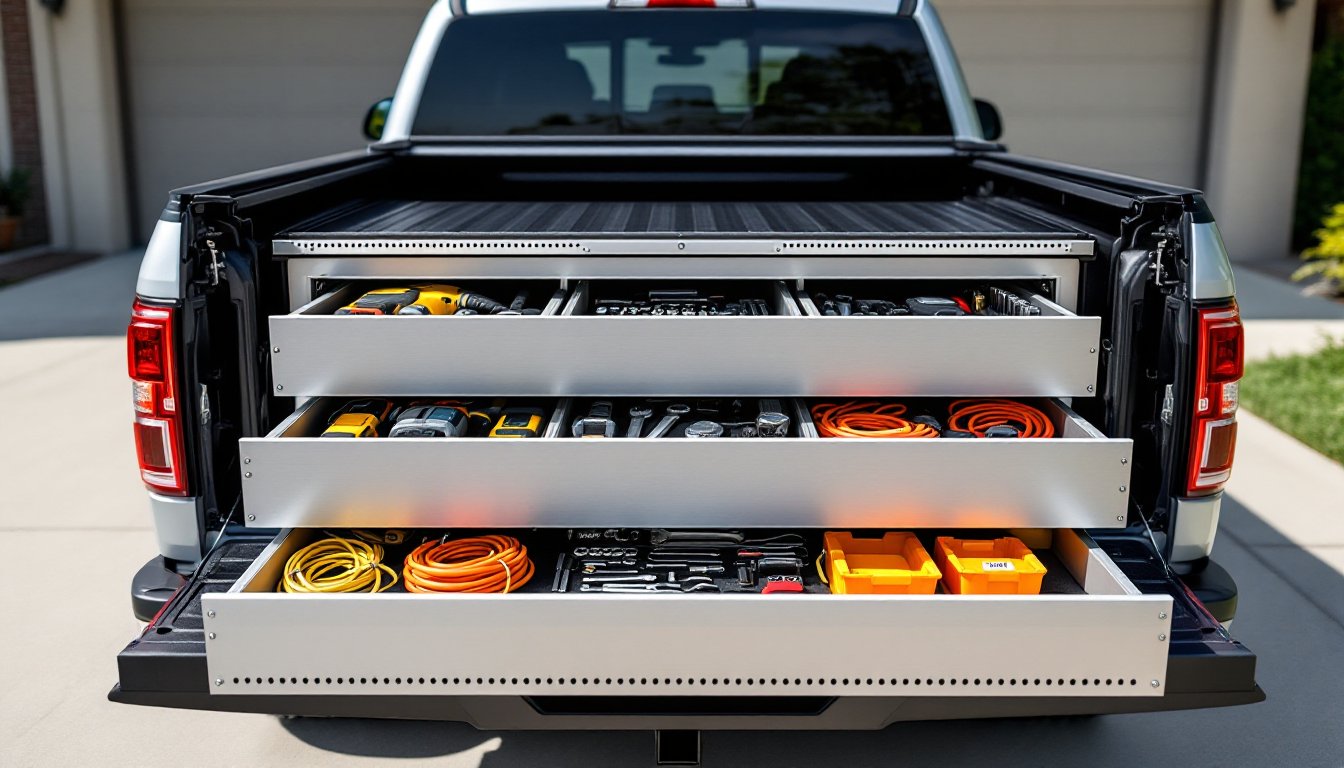

If you’ve ever dug through a disorganized truck bed looking for a ratchet strap, toolbox, or camping gear, you know the frustration. Loose cargo shifts around, valuable tools get buried, and space gets wasted. Truck bed drawer storage systems solve all that by turning chaotic bed space into organized, accessible storage. These setups transform your pickup into a mobile workstation or adventure rig, keeping everything secured and within reach. Whether you’re a contractor hauling tools daily or a weekend warrior packing for off-grid trips, the right drawer system makes a measurable difference in how you use your truck.
Key Takeaways
- Truck bed drawer storage transforms disorganized pickup beds into secure, accessible compartments that reduce cargo shifting and save time locating tools and gear.
- Pre-built drawer systems cost $1,200–$3,500 and install in 2–4 hours, while DIY builds run $300–$700 in materials but require 15–25 hours and complete control over customization.
- Quality drawer slides with ball-bearing mechanisms and 150-pound minimum load ratings are essential, as cheaper slides bind under load on uneven terrain.
- Weatherproofing with closed-cell foam gaskets and rubber seals prevents moisture damage and debris infiltration, especially critical for plywood DIY systems.
- Proper organization—assigning each drawer a specific purpose and using foam dividers or modular trays—multiplies storage efficiency and makes accessing gear intuitive.
- Secure installation using stake pockets or heavy-duty clamps, proper leveling, and LED lighting upgrades ensure safety, function, and usability in all conditions.
Why Truck Bed Drawer Storage Systems Are Game-Changers
Standard truck beds are wide-open spaces that encourage chaos. Everything slides around during turns, tools bang against each other, and finding what you need means climbing into the bed and moving half your load. Drawer systems fix that by creating defined compartments with smooth-glide access.
The biggest advantage is security. Drawers lock, keeping expensive tools and equipment safe from theft, especially important for work trucks parked on job sites overnight. Most quality systems include weather-resistant seals to protect contents from rain, snow, and road spray, even if you don’t have a tonneau cover.
Organization improves dramatically. Instead of stacking toolboxes or tossing bags into the bed, you assign each drawer a purpose: one for power tools, another for fasteners and hand tools, a third for recovery gear or camping supplies. The layout stays consistent, so you know exactly where to reach without thinking.
Weight distribution also matters. Drawer systems sit low in the bed, lowering your truck’s center of gravity compared to tall toolboxes or roof racks. This keeps handling predictable, especially on rough roads or during towing. And because drawers extend fully, you can access items at the front of the bed without crawling in, a real back-saver when you’re loading and unloading all day.
Types of Truck Bed Drawer Storage Solutions
Choosing between pre-built and DIY systems depends on your budget, timeline, and how custom you want the fit.
Pre-Built Drawer Systems
Pre-fabricated units come ready to install, typically built from aluminum, steel, or heavy-duty polymer. Aluminum is the most common for its strength-to-weight ratio and corrosion resistance. These systems are designed for specific truck models and bed lengths (5.5-foot, 6.5-foot, 8-foot), so fitment is precise.
Most pre-built systems feature roller-bearing slides rated for 150–250 pounds per drawer, depending on the manufacturer. High-end models include foam inserts, dividers, and modular trays that let you reconfigure compartments as needs change. Some integrate with bed cover systems or include top decks for additional flat storage.
Expect to pay $1,200–$3,500 for quality pre-built setups, depending on materials, drawer count, and features. Installation typically takes 2–4 hours with basic hand tools. Many top-rated truck bed organizers focus on modular designs that balance security with easy access.
DIY Truck Bed Drawer Builds
Building your own drawer system gives you complete control over dimensions, materials, and layout. The most common approach uses 3/4-inch plywood or Baltic birch for the carcass and drawer boxes, with 1×4 or 2×4 framing to support the structure.
For slides, full-extension drawer slides rated for 100–150 pounds work well and cost $30–$60 per pair at home centers. Heavy-duty ball-bearing slides handle rougher terrain better than side-mount slides. Frame the system to match your truck’s bed width and wheel wells, typically leaving 1–2 inches clearance on each side.
A basic two-drawer setup requires about two sheets of plywood, hardware, drawer slides, and a piano hinge if you’re adding a top-access lid. Total material cost runs $300–$700, depending on lumber prices and finish quality. Plan for 15–25 hours of build time if you’re comfortable with table saws, drills, and square cuts.
Many DIYers follow detailed plans from platforms like Instructables, where builders share measured drawings and step-by-step photo guides. The key advantage is customization, you can size drawers for specific gear, add cutouts for tie-down points, or integrate electrical for lighting or 12V outlets.
Weatherproofing is critical for DIY builds. Seal all plywood edges with polyurethane or exterior-grade paint, and install rubber weatherstripping around drawer fronts and lids. Otherwise, moisture will delaminate plywood and rust hardware within a season.
Key Features to Look for in Truck Bed Drawer Storage
Not all drawer systems are built the same. Focus on these features to match the system to your actual use case.
Drawer slide quality matters more than anything. Look for full-extension, ball-bearing slides with a minimum 150-pound load rating. Cheaper slides bind under load, especially on uneven terrain. If you haul heavy tools or equipment, step up to 200–250-pound slides.
Locking mechanisms should be robust. Basic systems use keyed locks on drawer fronts: better ones integrate locks that secure all drawers with one turn. For work trucks, a lock bar that spans multiple drawers adds theft resistance without fumbling with individual keys.
Weather sealing is non-negotiable if you work in rain, snow, or dusty conditions. Quality systems use closed-cell foam gaskets around drawer perimeters and top lids to keep moisture and debris out. Check for drainage channels or weep holes at the bottom, water will find its way in, so it needs a way out.
Material thickness affects durability. 16-gauge or thicker aluminum handles abuse without denting. Polymer systems should be UV-stabilized or they’ll crack after a couple of summers. Steel systems are tough but heavier and need powder coating to resist rust, bare steel will corrode fast in wet climates.
Deck height determines how much vertical space you lose. Most systems sit 10–14 inches tall, leaving 8–12 inches of clearance under a standard tonneau cover. If you haul tall items occasionally, look for systems with removable top decks.
Tie-down integration is often overlooked. Good systems preserve or relocate your truck’s factory tie-down points so you can still secure ladders, lumber, or bikes on top of the drawer deck. Some include D-rings or L-track built into the frame.
Installation Tips and Considerations
Most drawer systems install without drilling into the truck bed, relying instead on clamps or bolts that attach to stake pockets and bed rail channels. This preserves resale value and makes removal straightforward.
Measure twice, install once. Confirm your truck’s bed length (from inside the bulkhead to inside the tailgate) and width between wheel wells. Pre-built systems are model-specific, but manufacturing tolerances vary. Check fitment before fully assembling.
Level the system front to back and side to side. Use shims under the frame if your bed floor isn’t perfectly flat, most aren’t, especially older trucks. If drawers don’t sit level, they’ll bind or roll open while driving.
Secure the unit properly. Even systems that don’t drill into the bed should bolt to stake pockets or use heavy-duty clamps. Under hard braking or in a collision, an unsecured 200-pound drawer system becomes a dangerous projectile. Double-check all fasteners after the first 50 miles of driving.
If you’re building DIY, sand and finish all wood surfaces before installation. Once it’s in the truck, sanding becomes a messy hassle. Apply at least two coats of polyurethane or marine-grade spar varnish to all plywood, including edges and interior surfaces. This seals against moisture and makes cleaning easier.
Test drawer operation before loading them. Slides should extend and retract smoothly without binding. If a drawer sticks, check for square, twisted frames or misaligned slides cause most problems. A carpenter’s square and a few shim adjustments usually fix it.
Consider adding LED strip lighting inside drawers or under the deck. Many systems include wiring channels, or you can run low-voltage lights off a portable battery pack. It’s a small upgrade that makes a big difference working in the dark or on job sites before sunrise.
Maximizing Your Truck Bed Drawer Organization
Once your system is installed, smart organization multiplies its usefulness. Treat it like a rolling shop or base camp, not just a bigger toolbox.
Assign each drawer a clear role. Common setups include one drawer for power tools and batteries, another for hand tools and fasteners, and a third for safety or recovery gear (jumper cables, tow straps, first aid). Label drawer fronts or use color-coded tags if multiple people access the truck.
Use foam inserts or dividers to keep items from sliding around inside drawers. Many home organization systems offer modular trays that fit standard drawer dimensions. For tools, cut custom foam (toolbox foam or EVA foam sheet) so each item has a defined slot. This also makes it obvious when something’s missing.
Maximize vertical space inside each drawer. Stackable parts bins, shallow trays, or magnetic tool bars on the inside of drawer fronts add storage without cluttering the main compartment. Avoid the temptation to overfill, drawers should close easily, and overloading wears out slides fast.
Keep weight low and centered. Put the heaviest items, toolboxes, large batteries, recovery gear, in the lowest drawers near the cab. This maintains your truck’s balance and makes those drawers easier to open (heavy drawers on top can be awkward to pull out).
Review and purge regularly. Every few months, empty one drawer at a time and evaluate what you actually use. Tools that haven’t moved in six months can go back to the garage. Old hardware, dried-up caulk tubes, and broken gear waste space and add weight.
Finally, keep a basic inventory list taped inside the tailgate or stored digitally. When you’re on a job site and need to send someone back to the truck, a quick reference beats radio chatter or guessing which drawer holds the impact sockets.