

Suncast storage bins have earned a solid reputation among homeowners and DIYers for one simple reason: they hold up. Whether someone’s corralling yard tools, organizing a garage, or taming the chaos of a mudroom, these resin-based bins deliver weather resistance, stackability, and surprisingly good looks. Unlike flimsy plastic totes that crack after one winter or cardboard boxes that sag in humidity, Suncast products are designed to handle real-world conditions, UV exposure, temperature swings, and the occasional bump from a riding mower. This guide walks through what makes these bins worth the investment, which styles suit different projects, and how to get the most mileage out of them.
Key Takeaways
- Suncast storage bins are built from UV-stabilized, blow-molded resin that resists weather, UV exposure, and impact, lasting 7–10 years outdoors with minimal maintenance.
- Deck boxes work best for seasonal outdoor items like cushions and pool supplies, while stackable indoor totes excel at organizing garage and basement storage, with translucent designs letting you identify contents without opening each bin.
- Suncast storage bins come in neutral colors (taupe, brown, dark gray) with reinforced corners and locking lids, making them stackable, secure, and suitable for HOA-compliant properties.
- Choose the right bin size by measuring your space and weight capacity; avoid overloading stackable totes (typically rated 25–50 pounds each) and place outdoor bins on pavers or rubber mats to prevent moisture damage from bare soil.
- Beyond traditional storage, Suncast bins can serve as mudroom benches, mobile workshop carts, pet food stations, raised garden bed bases, and DIY compost bins with creative modifications.
- Maintain your Suncast storage bins by cleaning spills immediately, lubricating hinges annually, avoiding harsh chemicals, and inspecting gaskets and seals to extend their outdoor lifespan and warranty coverage.
Why Suncast Storage Bins Are a Top Choice for Home Organization
Suncast manufactures storage solutions using blow-molded resin, a process that fuses two heated plastic sheets into a single hollow form. This construction method creates bins that are lightweight yet impact-resistant, critical for outdoor use where hail, falling branches, or accidental kicks are inevitable.
The resin is UV-stabilized, meaning it won’t fade to chalky gray or become brittle after summers of direct sun. Many cheaper bins use unstabilized polyethylene that degrades within two to three years: Suncast products typically last seven to ten years outdoors with minimal maintenance.
Another advantage: neutral color palettes. Most models come in taupe, brown, or dark gray, shades that blend into decking, siding, and landscaping without screaming “plastic storage.” This matters for HOA compliance and general curb appeal.
Suncast also prioritizes locking lids and built-in handles on larger units, features often skipped in budget lines. Locking lids prevent wind from flipping open deck boxes, while molded handles make it possible for one person to reposition a 50-gallon bin without needing a dolly.
Finally, many Suncast bins are stackable with reinforced corners, so they won’t bow or buckle under load. This is essential in garages or sheds where vertical storage is the only option.
Types of Suncast Storage Bins and Their Best Uses
Heavy-Duty Deck Boxes and Outdoor Storage
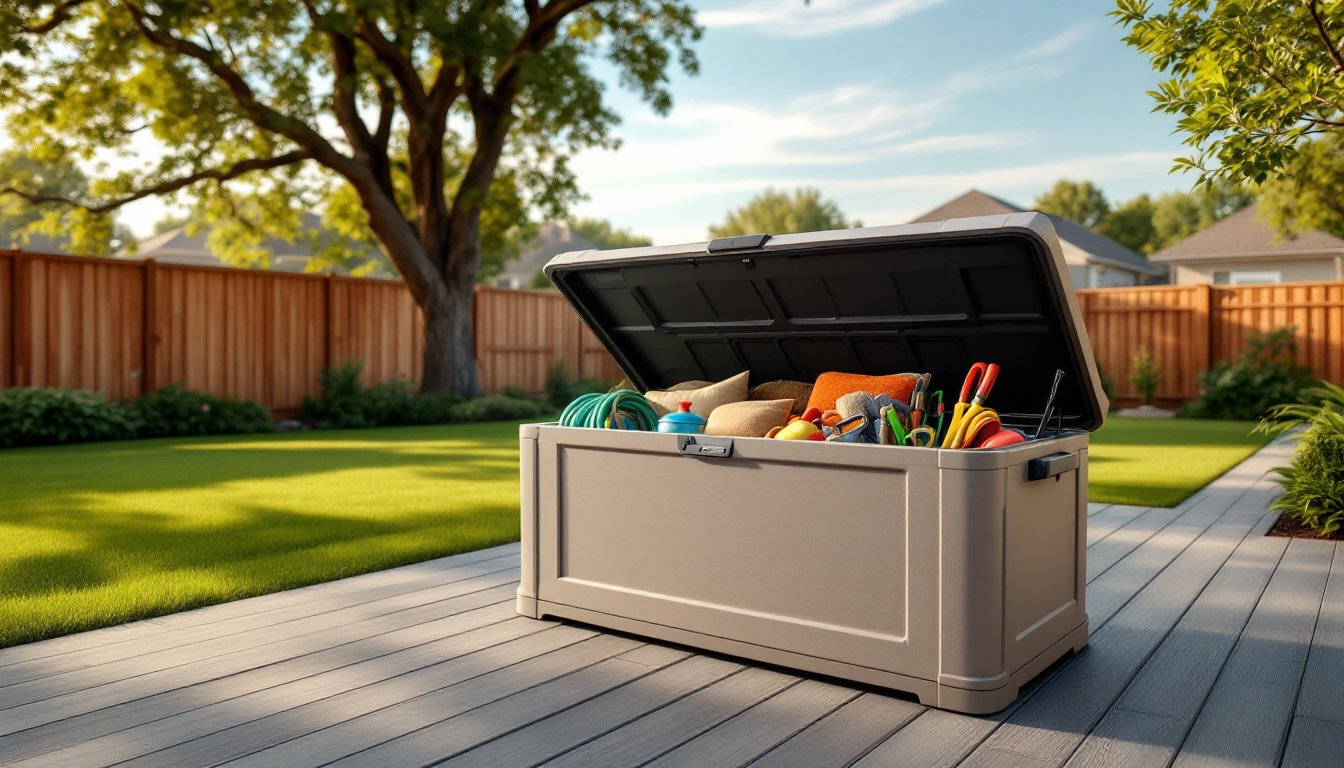
Deck boxes are Suncast’s flagship product. These horizontal chests range from 50 gallons to 150 gallons and are built to withstand year-round outdoor exposure. The larger models (99 gallons and up) typically feature stay-dry interiors with sealed edges and a slight lip on the lid to shed rain.
Best uses:
- Patio cushions and outdoor textiles: A 99-gallon box holds six to eight standard dining chair cushions. The stay-dry design prevents mildew, which is a common problem with fabric stored in unventilated sheds.
- Pool supplies: Chlorine tablets, test kits, floats, and safety equipment stay organized and out of the sun. The locking lid keeps curious kids and pets out.
- Firewood and fire pit accessories: Smaller 50-gallon boxes are ideal for kindling, fire starters, and a few logs. Resin won’t rot like wood bins or rust like metal.
- Garden tools and hoses: Rakes, pruners, trowels, and coiled hoses fit neatly. Some models include interior hooks or trays for small items.
Pro tip: Place deck boxes on level paver bases or composite decking, not directly on soil. Even with sealed bottoms, ground moisture can wick up and encourage mold on stored items. A simple layer of landscape fabric or a concrete paver solves this.
Indoor Storage Totes and Stackable Bins
Suncast’s indoor line includes translucent totes with snap-on lids, vertical storage cabinets, and modular utility bins. These are lighter-duty than deck boxes but still outperform typical household totes in durability.
Translucent totes (18-gallon to 30-gallon sizes) are excellent for basement and attic storage. The semi-clear walls let someone identify contents without opening every bin. Snap latches (not flimsy clips) keep lids secure during moves or stacking.
Best uses:
- Seasonal decor: Holiday lights, ornaments, and artificial trees stay dust-free and organized. Label the bin ends with a permanent marker or adhesive labels.
- Workshop supplies: Screws, nails, saw blades, sandpaper, and hand tools stay sorted. Use smaller bins (like Suncast’s 6-quart utility boxes) inside larger totes for further organization.
- Pantry overflow: Bulk dry goods, extra canning jars, or seldom-used appliances fit in 18-gallon totes. Resin won’t absorb odors or attract pests like cardboard.
- Garage shelving: Stackable bins with reinforced rims fit standard 16-inch-deep utility shelves. Three 18-gallon totes stack to about 48 inches tall without sagging.
Vertical storage cabinets (around 30 inches wide by 72 inches tall) are essentially modular closets with adjustable shelves. They’re useful in garages or unfinished basements where built-in shelving isn’t present. The doors keep dust off tools and supplies while maintaining a cleaner appearance than open wire racks.
How to Choose the Right Suncast Storage Bin for Your Needs
Start by measuring the available space and the items to be stored. A common mistake is buying a deck box that’s too large for a balcony or too small for the intended load. Use a tape measure, not a guess.
For outdoor bins, check the IP rating or water resistance claims. Suncast deck boxes with “stay-dry” labels typically have rubber gaskets or overlapping lid designs. Models without this feature are still weather-resistant but not waterproof, fine for tools, not ideal for electronics or fabric.
Weight capacity matters for stacking. Suncast rates stackable totes for specific loads (often 25 to 50 pounds per bin). Exceeding this causes lids to crack or corners to deform. If storing heavy items like paint cans or hardware, use bins with reinforced rims and limit stack height to three units.
Consider access frequency. Top-loading deck boxes work well for seasonal items retrieved a few times per year. For daily-use items like dog leashes or gardening gloves, a vertical cabinet with doors or an open-top bin is more practical.
Color choice affects temperature. Dark bins (brown, dark gray) absorb more heat, which can be an issue for items sensitive to temperature fluctuation. Lighter shades (taupe, sand) stay cooler in full sun and are generally recommended for organizing fabric cushions or vinyl pool toys.
Locking mechanisms vary. Some Suncast lids use simple latch hooks: others accommodate padlocks. If theft or child safety is a concern, choose a model with metal hasps rated for a standard shackle padlock (usually 1/4-inch to 5/16-inch diameter).
Creative Ways to Use Suncast Storage Bins Around Your Home
Beyond the obvious, Suncast bins solve problems in less conventional spaces.
Mudroom bench seating: A 50-gallon deck box (around 48 inches long) can double as a bench when topped with a 3/4-inch plywood cushion base covered in outdoor fabric. The lid supports up to 300 pounds on most models, enough for two adults. Store boots, pet supplies, or sports gear inside.
Workshop mobile cart: Mount a 30-gallon tote on a platform dolly (the kind with four swivel casters). This creates a rolling cart for frequently used hand tools, extension cords, or painting supplies. Drill pilot holes through the bin bottom into the dolly frame and secure with 1/4-20 bolts and fender washers to distribute load.
Raised garden bed base: Turn a damaged or cracked Suncast bin into a planter base for a raised bed. Flip it upside down, cut out the bottom with a jigsaw, and set it on level ground. Fill with landscape fabric and soil. The resin walls keep grass and weeds from encroaching, and the slight elevation aids drainage.
Pet food station: A deck box in the garage or laundry room keeps 25-pound dog food bags fresh and pest-free. Some owners transfer kibble into the bin directly: others keep it bagged inside the bin for easier pouring. Add a scoop hook to the interior lid with adhesive-backed utility hooks.
Recycling center: Use three stackable 18-gallon totes labeled for glass, plastic, and metal. Stack them vertically in a pantry or garage corner. The translucent walls let you see when each bin is full. This approach is cleaner and more space-efficient than separate curbside bins stored indoors.
DIY compost bin: Drill 3/8-inch holes in the sides and bottom of a 30-gallon tote for aeration. Set it on bricks or pavers in a shaded yard area. Layer kitchen scraps with brown material (shredded leaves or cardboard). The resin won’t rot, and the snap-on lid keeps animals out. For faster composting, use two bins and alternate batches. Experienced composters often follow strategies from Real Simple to balance green and brown layers.
Maintenance Tips to Extend the Life of Your Suncast Bins
Resin storage bins require minimal upkeep, but a few habits prevent premature wear.
Clean spills immediately. Oil, gasoline, and solvents can soften or discolor resin over time. Wipe with a damp cloth and mild dish soap. Avoid acetone or harsh degreasers, which can dull the finish.
Lubricate hinges annually. Deck box hinges are typically polypropylene or nylon and don’t rust, but they can stiffen in cold weather. Apply a dry silicone spray (not WD-40, which attracts dust) to the hinge pins once a year.
Store lids closed. Leaving a deck box open during storms or high winds can bend hinges or crack the lid. When airing out a bin after heavy use, prop the lid at a 45-degree angle with a bungee cord rather than leaving it fully open.
Avoid overloading. Suncast lists weight and volume capacities on each product. Exceeding these causes stress cracks at corners and hinge mounts, damage not covered by warranty.
Keep bins off bare concrete in freezing climates. Concrete wicks moisture, and repeated freeze-thaw cycles can cause hairline cracks in the bin bottom. Set outdoor bins on pressure-treated 2×4 runners or rubber mats to create an air gap.
Inspect gaskets and seals. On stay-dry models, the rubber gasket around the lid can dry out or collect debris. Clean it with a damp cloth twice a year and apply a thin layer of silicone grease (the kind used for plumbing O-rings) to keep it pliable.
Touch up scratches. Light scratches don’t affect function, but deep gouges can become stress points. Fill them with a dab of two-part plastic epoxy (available at hardware stores) and sand smooth once cured. This prevents the gouge from spreading.
If a bin develops a crack, plastic welding is an option for handy DIYers. A basic soldering iron or plastic welding kit can fuse resin back together. Clean the crack thoroughly, clamp it shut, and run a bead of melted resin along the seam. This works best on structural cracks (corners, bottoms), not cosmetic lid damage. For detailed repair techniques, many DIYers refer to guides from Martha Stewart on restoring plastic outdoor furniture, which use similar methods.
Finally, register the product. Suncast offers limited warranties (usually five years) on many bins. Registering online ensures faster replacement if a manufacturing defect appears. Keep the receipt and model number handy, usually stamped on the bin bottom or inside the lid.